
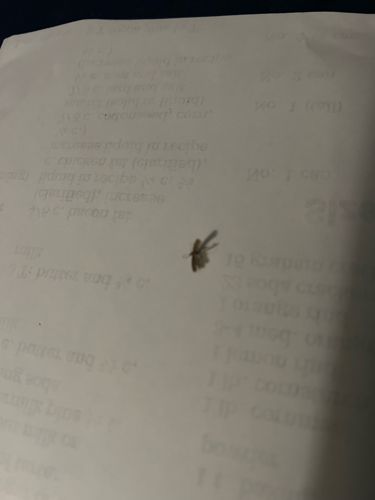
Fungus Gnat
Various genera and species, e.g., Bradysia spp. (Sciaridae), Mycetophila spp. (Mycetophilidae)
- Order & Family
- Order: Diptera (flies), Family: Sciaridae, Mycetophilidae, or other related families within superfamilies Sciaroidea/Mycetophiloidea.
- Size
- Typically 1/8 to 1/4 inch (2-5 mm) in length.
Natural Habitat
Damp environments rich in decaying organic matter or fungi, such as potting soil of houseplants, greenhouses, compost piles, and other moist areas. While the image shows it on what appears to be paper, their natural habitat is moist soil indoors and outdoors.
Diet & Feeding
Larvae primarily feed on fungi, decaying organic matter, and plant roots. Adult fungus gnats do not feed significantly and have a short lifespan, primarily focusing on reproduction.
Behavior Patterns
Females lay eggs in damp soil or decaying organic matter. Larvae are aquatic or semi-aquatic. Adults are typically weak fliers, often found near their breeding sites. They are attracted to light.
Risks & Benefits
Risks: Larvae can damage plant roots, especially in seedlings and young plants, leading to wilting or stunted growth. They are primarily a nuisance pest for houseplants and in greenhouses. They do not bite humans or transmit diseases. Benefits: In natural ecosystems, they play a role in decomposition by consuming fungi and decaying organic matter.