
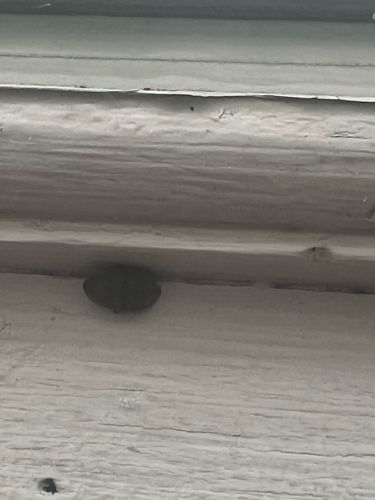
Mud Dauber Wasp (nest)
Sceliphron caementarium, Chalybion californicum, or similar species likely
- Order & Family
- Hymenoptera, Sphecidae or Crabronidae (depending on species)
- Size
- Nests can vary, but individual cells are typically 2-3 cm (0.8-1.2 inches) long. The wasps themselves are usually 1.2-2.5 cm (0.5-1 inch) long.
Natural Habitat
Often found building nests in sheltered locations such as under eaves, in attics, sheds, garages, or other man-made structures, as well as natural crevices.
Diet & Feeding
The adult wasps feed on nectar and plant sap. The larvae, however, are carnivorous, feeding on spiders that the female wasp paralyzes and places in the nest cells.
Behavior Patterns
Female mud daubers construct characteristic mud nests, often tubular or organ-pipe shaped, or globular in appearance. Each cell is provisioned with paralyzed spiders before an egg is laid and the cell is sealed. They are generally solitary and not aggressive unless directly provoked or their nest is disturbed.
Risks & Benefits
Potential risks include a painful sting if provoked, though they are generally docile. Benefits include biological pest control, as they prey on spiders, which can help manage spider populations around homes and gardens.