
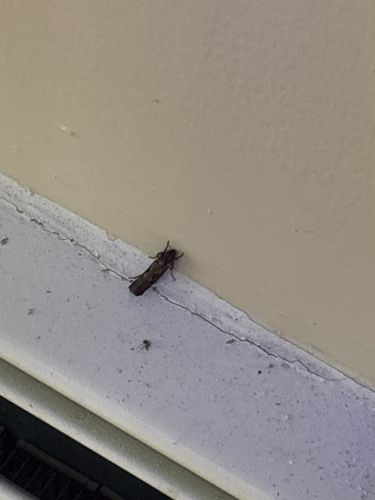
Case-bearing Clothes Moth
Tinea pellionella
- Order & Family
- Lepidoptera (Moths and Butterflies), Tineidae (Fungus Moths and Clothes Moths)
- Size
- Adults typically have a wingspan of 9-16 mm (0.35-0.63 inches). Larvae can grow up to 12 mm (0.47 inches) long.
Natural Habitat
Indoors, in closets, attics, storage areas, and any place where natural fibers are stored or found. They prefer dark, undisturbed areas. They are common in homes, museums, and warehouses.
Diet & Feeding
The larvae of the Case-bearing Clothes Moth feed on materials of animal origin, particularly keratin-containing substances. This includes wool, silk, fur, feathers, felt, animal bristles (e.g., in brushes), and sometimes even dried animal carcasses. They can also damage blends containing these fibers.
Behavior Patterns
Case-bearing clothes moths are often found in dark, undisturbed areas. The larvae build silk cases incorporating fibers from their food source, which they carry with them as they feed and grow. Adults are not active feeders and are weak fliers, often seen fluttering aimlessly. They are most active at night or in dimly lit conditions. Females lay eggs on suitable food sources.
Risks & Benefits
Potential risks: Clothes moths are considered significant household pests due to their destructive feeding habits on valuable textiles and natural fibers. They can cause widespread damage to clothing, carpets, upholstery, and stored goods. They do not bite humans or transmit diseases. Benefits: None in an indoor setting; in nature, they play a minor role in breaking down natural organic matter.