
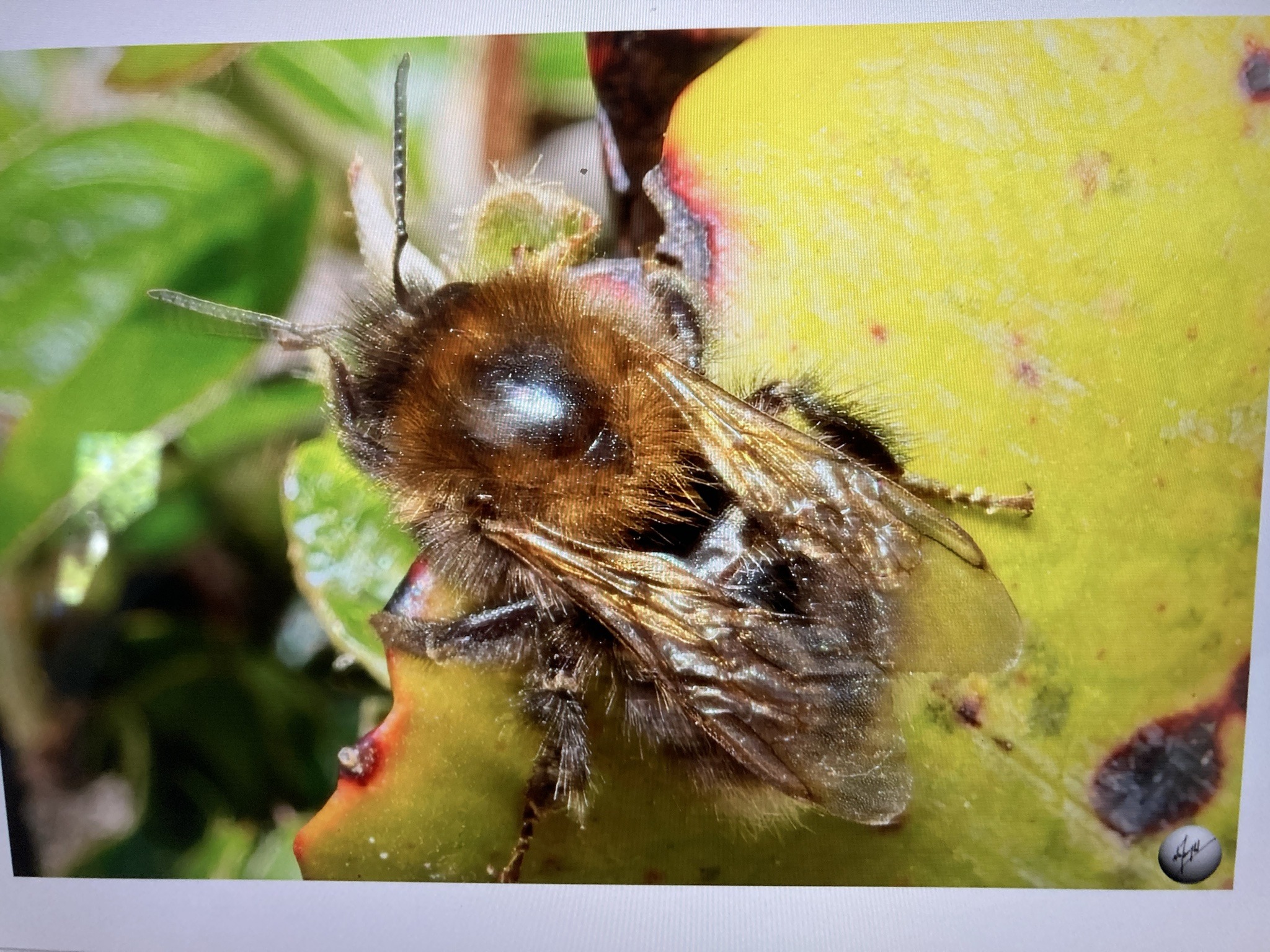
Community identification
European Orchard Bee
Osmia cornuta
- Order & Family
- Hymenoptera, Megachilidae
- Size
- 12-15 mm (females are generally larger than males)
Natural Habitat
Gardens, orchards, and woodland edges across Europe and parts of North Africa.
Diet & Feeding
Nectar and pollen, primarily from fruit trees and spring-blooming flowers.
Behavior Patterns
Solitary bees that nest in pre-existing cavities such as hollow reeds or beetle holes. They are active in early spring and are efficient pollinators.
Risks & Benefits
Extremely beneficial as pollinators, especially for fruit production. They are non-aggressive and very rarely sting unless handled roughly; the sting is considered less painful than a honeybee's.