
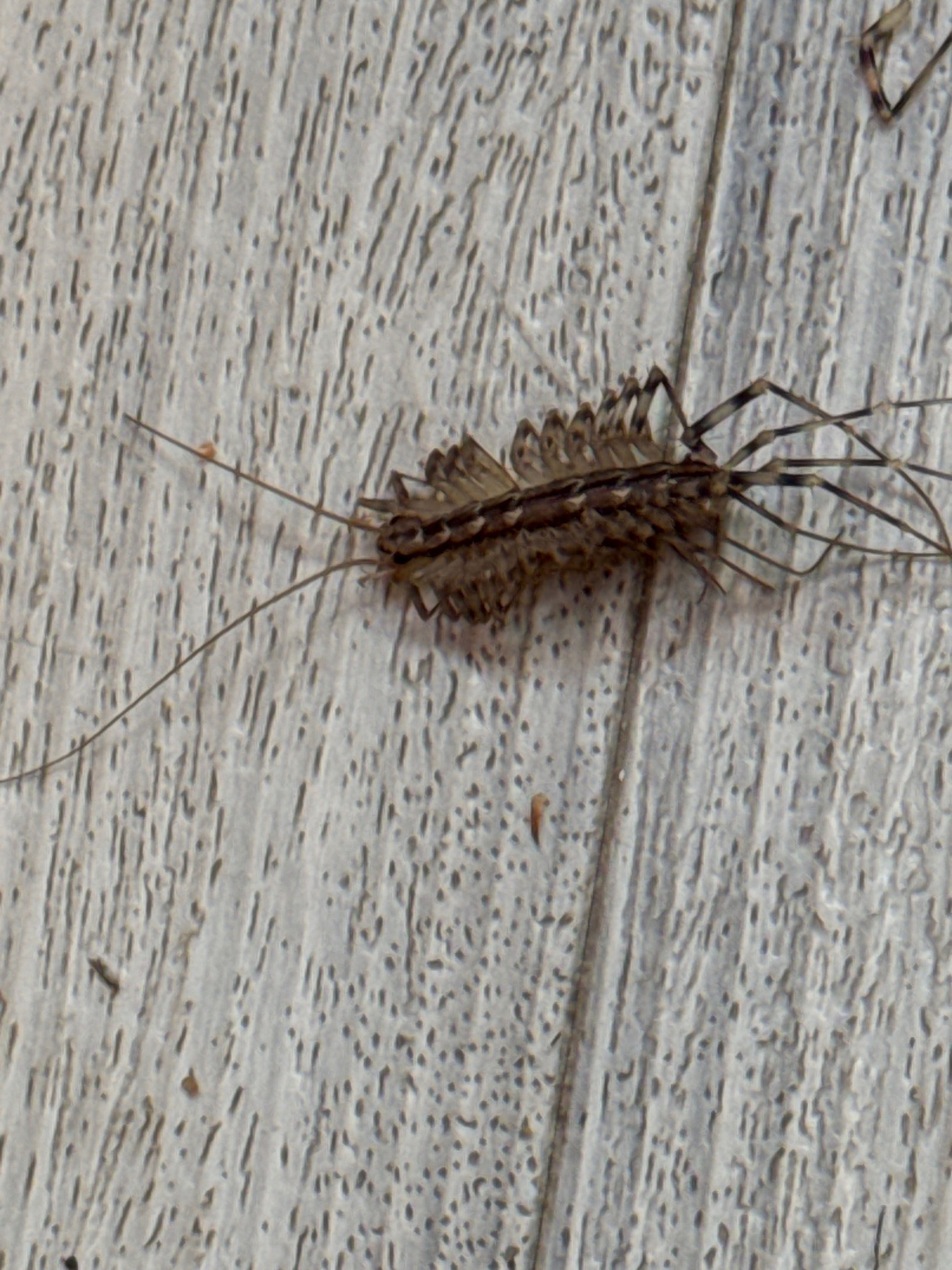
Community identification
House Centipede
Scutigera coleoptrata
- Order & Family
- Scutigeromorpha: Scutigeridae
- Size
- 25–35 mm (1–1.5 inches) long, but can appear much larger due to its up to 15 pairs of long legs.
Natural Habitat
Damp, cool areas like basements, bathrooms, and crawl spaces; originally from the Mediterranean but now found worldwide in human dwellings.
Diet & Feeding
Insectivorous predator that eats household pests including flies, cockroaches, termites, spiders, silverfish, and moths.
Behavior Patterns
Extremely fast runner capable of up to 0.4 meters per second; nocturnal hunters that use long antennae to sense prey; life cycle includes egg, larval, and adult stages over several years.
Risks & Benefits
Highly beneficial as a natural pest control agent. While capable of biting humans in self-defense, their venom is weak, and they generally cannot pierce human skin; they are considered harmless and avoid human contact.