
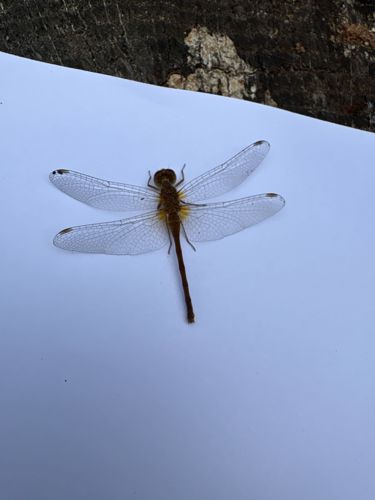
Dragonfly
Varies by species; e.g., 'Anax junius' (Common Green Darner) or 'Libellula pulchella' (Twelve-spotted Skimmer). It's difficult to identify to the exact species without more detailed features and geographical context, but it belongs to the suborder Anisoptera.
- Order & Family
- Order: Odonata, Suborder: Anisoptera (true dragonflies). The specific family can vary greatly as there are many, but commonly seen families include Libellulidae (Skimmers) or Aeshnidae (Hawkers/Darners). Based on the image showing broad wings and a robust body, it is likely a member of the diverse family Libellulidae.
- Size
- Generally, adult dragonflies range from 2 to 12 cm (0.8 to 4.7 inches) in body length, with wingspans ranging from 3 to 15 cm (1.2 to 6 inches). The individual in the image appears to be in the medium to larger range for dragonflies.
Natural Habitat
Dragonflies are found globally, typically near freshwater sources such as ponds, lakes, rivers, streams, and wetlands. Their aquatic nymphs require clean water with submerged vegetation or debris for shelter. Adults are often seen flying over water or in nearby open areas and meadows.
Diet & Feeding
Adult dragonflies are predatory insects, feeding on other flying insects such as mosquitoes, flies, moths, and smaller butterflies. They catch their prey in flight using their legs like a basket. Dragonfly nymphs (naiads) are aquatic predators, feeding on a variety of aquatic invertebrates like mosquito larvae, tadpoles, and even small fish.
Behavior Patterns
Dragonflies are expert fliers, capable of flying forwards, backward, sideways, and hovering. They are most active during warm, sunny days. Nymphs live underwater for months to years, molting several times before emerging as adults. Adult dragonflies have a relatively short lifespan, often only a few weeks or months. They often perch with their wings spread. Many species are territorial, especially males.
Risks & Benefits
Dragonflies pose no direct risk to humans; they do not sting or bite. Their primary benefit is as natural pest control, as both adults and nymphs consume large quantities of pest insects like mosquitoes and flies, which can transmit diseases. They are also important bioindicators, as their presence often signifies a healthy aquatic ecosystem.