
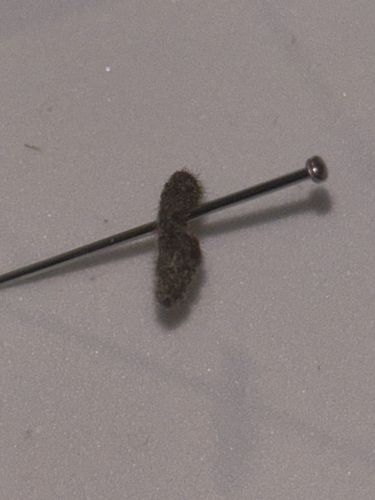
Case-bearing Clothes Moth Larva
Tinea pellionella
- Order & Family
- Lepidoptera (Moths and Butterflies), Tineidae (Fungus Moths and Clothes Moths)
- Size
- Larvae (caterpillars) are typically 1/8 to 1/2 inch (3-12 mm) long. The case itself can be up to 1/2 inch long.
Natural Habitat
Indoors in dark, undisturbed areas such as closets, attics, storage chests, and behind furniture. They prefer environments with animal fibers.
Diet & Feeding
Primarily keratin, which is found in natural animal fibers. This includes wool, silk, fur, felt, feathers, and sometimes synthetic blends if they contain some natural fibers or food residues. They also feed on pet hair, dust bunnies, and fabric lint.
Behavior Patterns
The larva constructs a portable silken case, often incorporating pieces of the material it is feeding on, allowing it to move and feed while remaining protected. It rarely leaves this case. The larvae are destructive feeders. Adults are small, shiny, grayish-brown moths that are weak flyers and tend to avoid light. They do not feed and live only to reproduce.
Risks & Benefits
Potential risks include significant damage to clothing, carpets, upholstery, and stored textiles made of animal fibers. There are no known benefits to humans or the ecosystem, as they are primarily considered a household pest.