
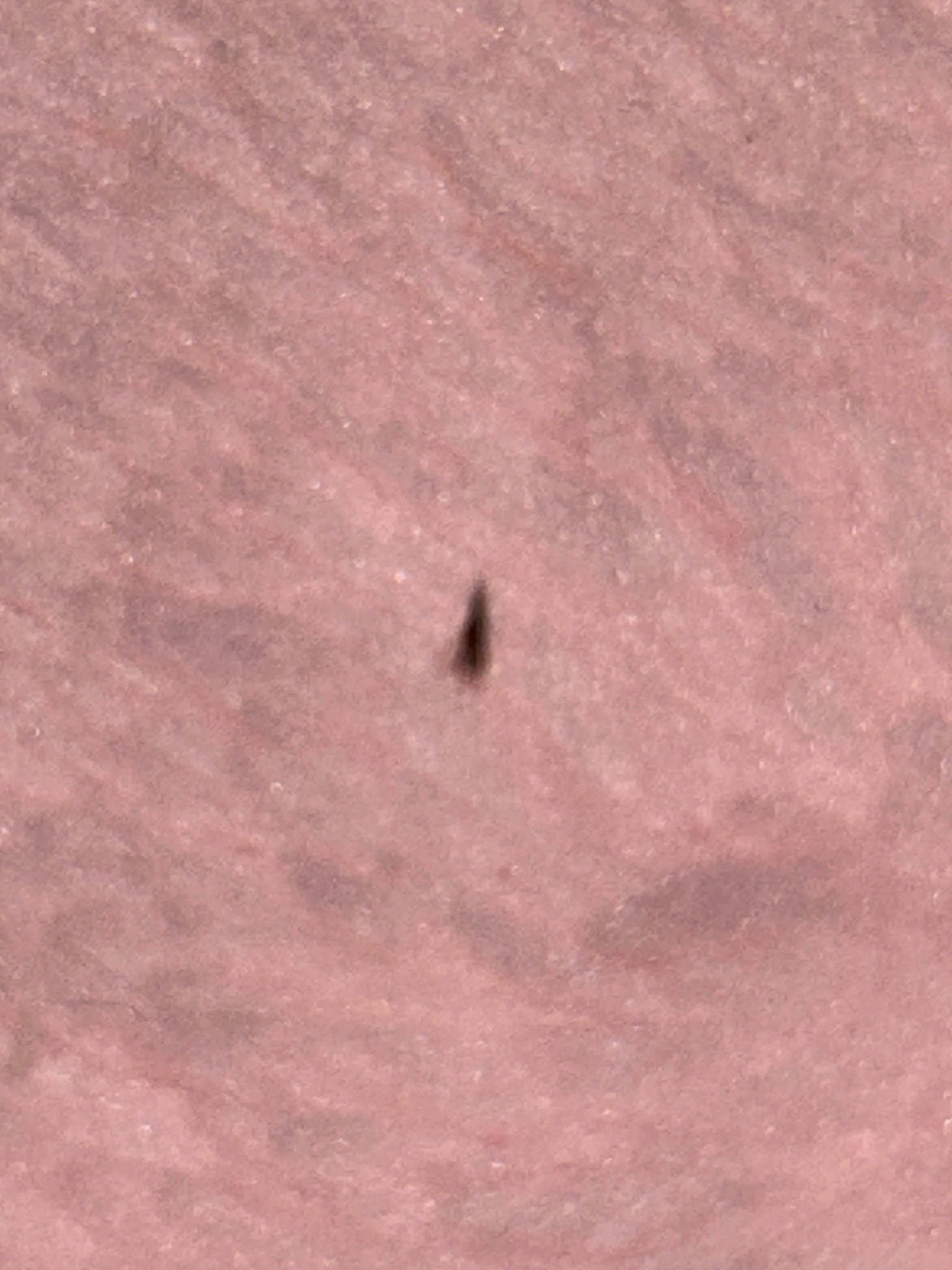
Community identification
Small fly or gnat (image too blurred for species-level identification)
Uncertain; likely Diptera, possibly a fungus gnat (Sciaridae)
- Order & Family
- Diptera; family uncertain, possibly Sciaridae
- Size
- Typically 1–4 mm long; the pictured insect appears only a few millimeters in length.
Natural Habitat
Fungus gnats commonly occur around damp potting soil, decaying plant material, greenhouses, and moist indoor areas.
Diet & Feeding
Adults often consume little or feed on nectar; larvae commonly eat fungi and decaying organic matter, and some damage plant roots.
Behavior Patterns
Adults are weak fliers attracted to moisture and light, often hovering near plants. Larvae develop in moist soil or organic debris, completing multiple generations per year indoors.
Risks & Benefits
Generally harmless to people and pets and do not bite. They help decompose organic matter, though larvae can stress seedlings and houseplants when abundant.