
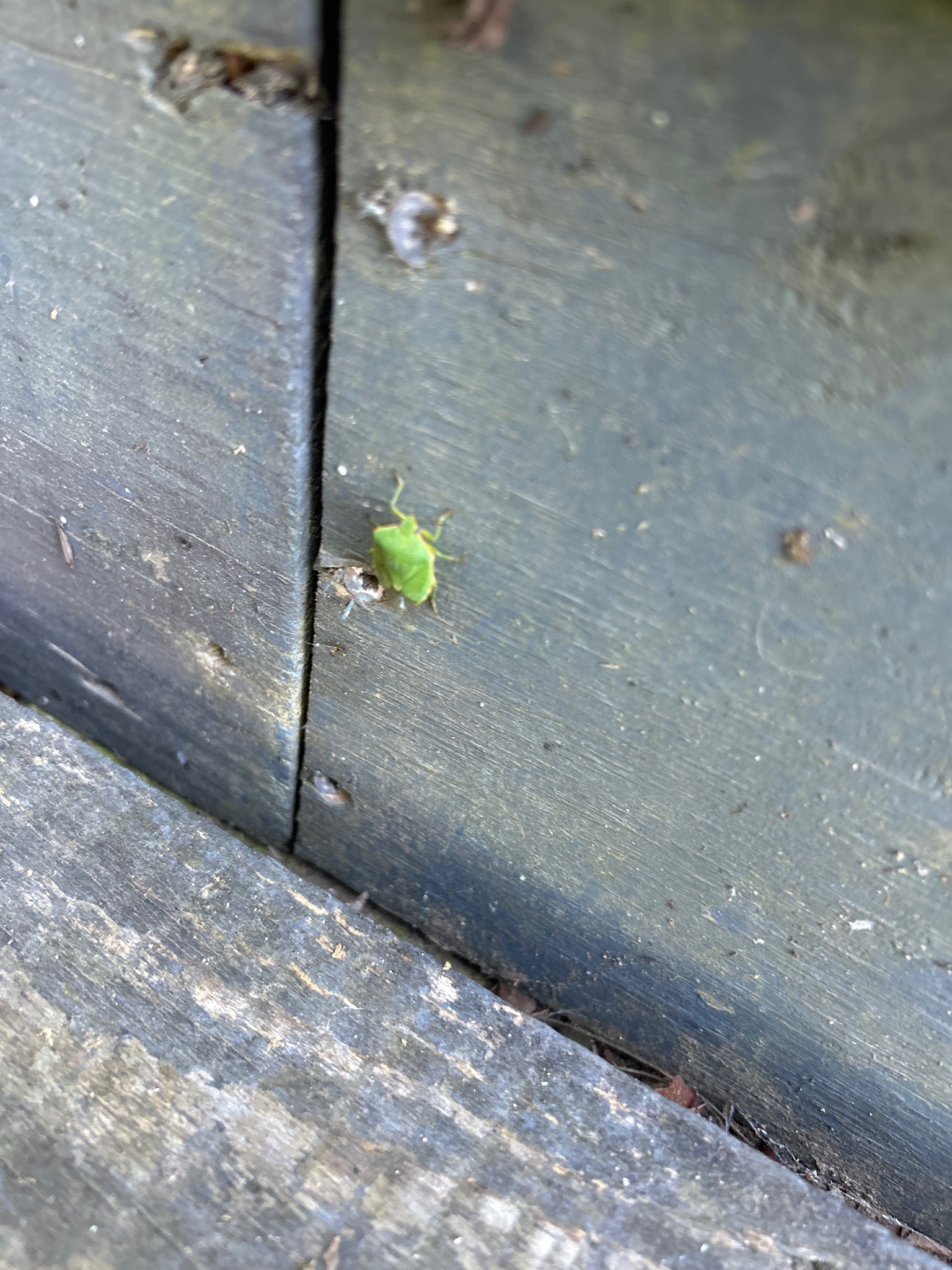
Green stink bug nymph
Likely Chinavia hilaris (green stink bug), nymph
- Order & Family
- Hemiptera; Pentatomidae
- Size
- About 3–15 mm, depending on nymphal stage; adults reach roughly 13–17 mm.
Natural Habitat
Vegetation, gardens, orchards, and nearby wooden structures where plant hosts grow. Adults and nymphs commonly occupy leaves, stems, and developing fruit.
Diet & Feeding
Pierces plants with straw-like mouthparts and sucks sap from leaves, shoots, pods, and fruit. Feeding can cause spotting, distortion, or premature fruit drop.
Behavior Patterns
Nymphs pass through five wingless stages before becoming adults; they often cluster around host plants and produce defensive odors when disturbed. Adults overwinter in sheltered places and are active in warm seasons.
Risks & Benefits
Usually harmless to people, though defensive secretions smell unpleasant and may irritate sensitive skin. It can damage crops and garden plants; like other stink bugs, it also serves as prey for birds, spiders, and predatory insects.