
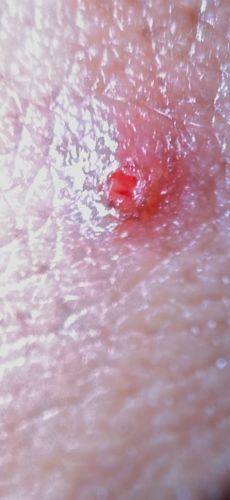
Chigger (Red Bug or Harvest Mite Larva)
Trombicula spp. (e.g., Trombicula alfreddugesi)
- Order & Family
- Order: Trombidiformes, Family: Trombiculidae
- Size
- Larvae (the parasitic stage shown) are microscopic, approximately 0.15 to 0.3 mm in diameter.
Natural Habitat
Found in tall grass, weeds, berry patches, forest edges, and moist, shaded vegetation. Adults live in the soil.
Diet & Feeding
Larvae are parasitic and feed on liquefied skin tissue (not blood) of animals and humans. Adults feed on small insects, insect eggs, and plant matter in the soil.
Behavior Patterns
The larvae crawl onto passing hosts from vegetation. They pierce the skin and inject digestive enzymes that break down skin cells into a liquid, which they ingest. Contrary to popular belief, they do not burrow under the skin; they form a feeding tube called a stylostome.
Risks & Benefits
Risks: Their bites cause intense, persistent itching and red welts (trombiculiasis). Excessive scratching can lead to secondary bacterial infections. In parts of Asia and the Pacific, specific species can transmit scrub typhus. Benefits: Adults help control populations of other small arthropods in the soil ecosystem.