
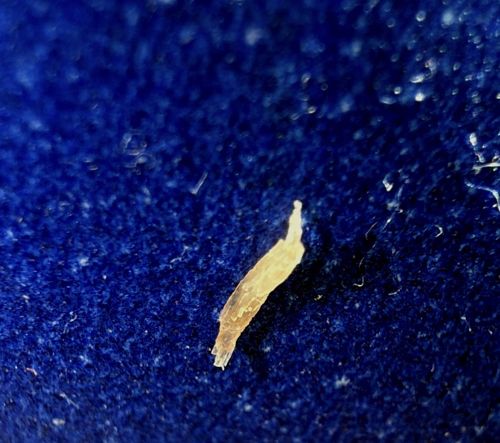
Clothing Moth Larva Casings
Tineola bisselliella (Webbing Clothes Moth) or Tinea pellionella (Case-making Clothes Moth)
- Order & Family
- Order: Lepidoptera, Family: Tineidae
- Size
- Typically 1/4 to 1/2 inch (6-12 mm) in length.
Natural Habitat
Dark, undisturbed areas in homes such as closets, wardrobes, underneath furniture, and in storage where natural fibers are kept.
Diet & Feeding
Keratin-rich materials including wool, fur, silk, feathers, felt, and leather. They may also feed on blended synthetic fabrics if they contain sweat or food stains.
Behavior Patterns
The larvae shun light and construct silken tubes or portable cases (depending on species) for protection while feeding. The adult moths are distinctive for fluttering erratically and preferring darkness over light sources.
Risks & Benefits
Risks: Significant pest that causes irreversible damage to expensive clothing, rugs, and upholstery. Benefits: In nature, they act as decomposers of animal hair and feathers, but they offer no direct benefit in a domestic setting.