
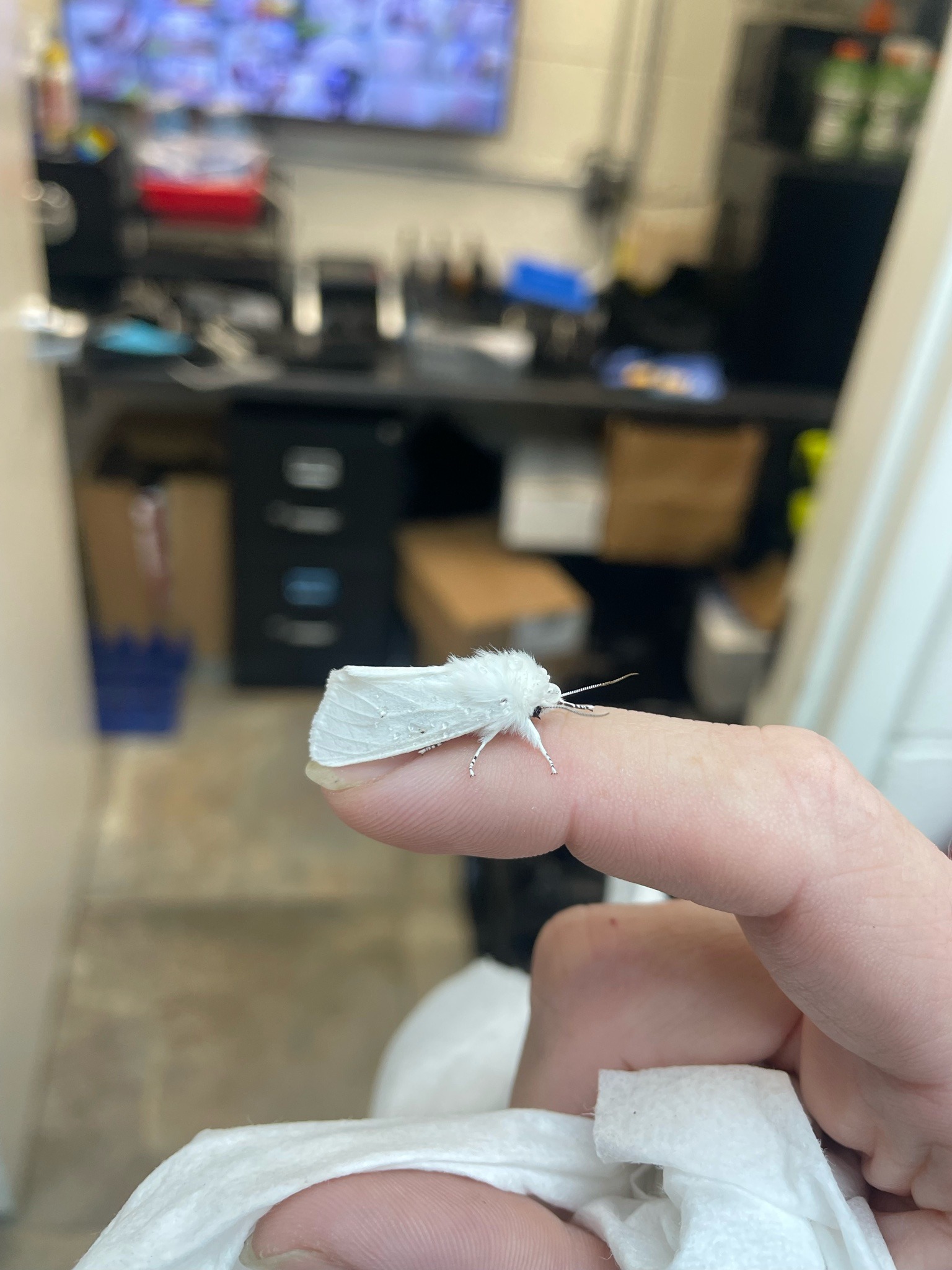
Community identification
Fall Webworm Moth
Hyphantria cunea
- Order & Family
- Lepidoptera: Erebidae
- Size
- Wingspan typically ranges from 25 to 35 mm (1 to 1.4 inches).
Natural Habitat
Deciduous forests, urban landscapes, and gardens across North America and parts of Europe/Asia.
Diet & Feeding
Larvae (caterpillars) are generalist feeders on over 600 species of trees and shrubs; adults do not feed and live only to mate.
Behavior Patterns
Larvae are known for spinning large webbing nests over branch tips. Adults are nocturnal and strongly attracted to artificial lights.
Risks & Benefits
Generally harmless to human health, though caterpillar hairs may cause mild skin irritation. They are considered minor pests of shade trees but also provide a significant food source for birds and parasitic insects.