
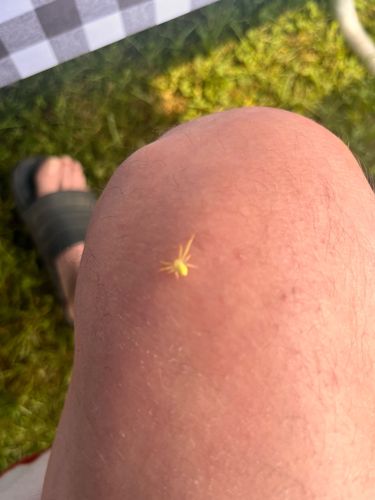
Goldenrod Crab Spider or Flower Crab Spider
Misumena vatia
- Order & Family
- Order: Araneae, Family: Thomisidae
- Size
- Females typically range from 7-10 mm in body length (excluding legs). Males are much smaller, usually 2-4 mm.
Natural Habitat
Commonly found in gardens, meadows, fields, and other areas with abundant flowering plants. They are often seen on white or yellow flowers, such as daisies, goldenrod, sunflowers, and yarrow, where their camouflage is most effective.
Diet & Feeding
Predatory. They primarily feed on insects that visit flowers, such as bees, flies, butterflies, and other smaller insects. They use their strong front legs to grab and hold prey.
Behavior Patterns
Crab spiders, especially those in the Misumena genus, are ambush predators. They do not build webs for catching prey, but rather wait on flowers or foliage, camouflaging themselves. This specific species is known for its ability to change color over several days to match the flower it is hunting from, typically white or yellow flowers. Males are considerably smaller than females and often have darker markings.
Risks & Benefits
Risks: Generally harmless to humans. While they possess venom to subdue their prey, their fangs are very small, and a bite is rare and typically causes only minor, localized irritation, if felt at all. They are not considered dangerous. Benefits: They are beneficial biological control agents in gardens and agricultural settings, as they prey on various insect pests, contributing to ecosystem balance.