
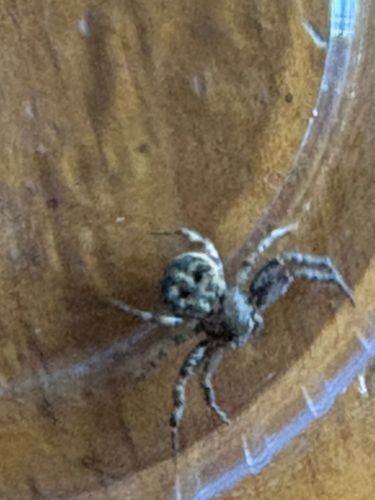
Jumping Spider
Salticidae (family, specific genus/species is hard to determine from the image alone)
- Order & Family
- Order: Araneae, Family: Salticidae
- Size
- Typically 3 mm to 25 mm (0.12 to 1 inch) in body length, depending on the species.
Natural Habitat
Jumping spiders are found in a wide variety of habitats, including forests, grasslands, deserts, gardens, and even inside homes. They prefer sunny, open areas where they can easily spot prey.
Diet & Feeding
Mainly small insects and other arthropods. They are predators.
Behavior Patterns
Jumping spiders are active hunters during the day, using their excellent vision to spot prey. They stalk their prey and then pounce on them. They do not build webs to catch food but may use silk for safety lines, to build silken retreats for molting or sleeping, and for egg sacs.
Risks & Benefits
Risks: Jumping spiders are generally not considered dangerous to humans. While they can bite, their venom is not medically significant and typically causes only mild, localized pain and swelling, if any reaction occurs at all. Benefits: They are beneficial as natural pest control, eating many common household and garden pests like flies, mosquitoes, and small roaches.