
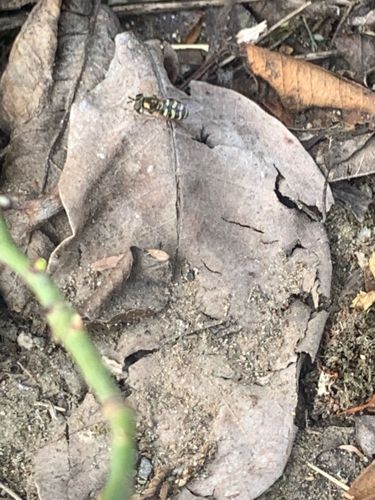
Community identification
Hoverfly (also known as Flower Fly or Syrphid Fly)
Family Syrphidae (genus and species vary, e.g., Eupeodes or Syrphus)
- Order & Family
- Order: Diptera, Family: Syrphidae
- Size
- 4 to 25 mm (0.15 to 1 inch) depending on the species.
Natural Habitat
Found worldwide across diverse habitats including gardens, meadows, forests, and agricultural fields near nectar-rich flowers.
Diet & Feeding
Adults feed primarily on nectar and pollen; larvae are often predatory, consuming aphids and other soft-bodied insects.
Behavior Patterns
Known for their ability to hover motionless in mid-air and then dart away rapidly; many species mimic bees or wasps as a form of protection (Batesian mimicry).
Risks & Benefits
Highly beneficial to the ecosystem; adults are important pollinators, and larvae are major biological control agents for agricultural pests like aphids. They do not sting or bite humans.