
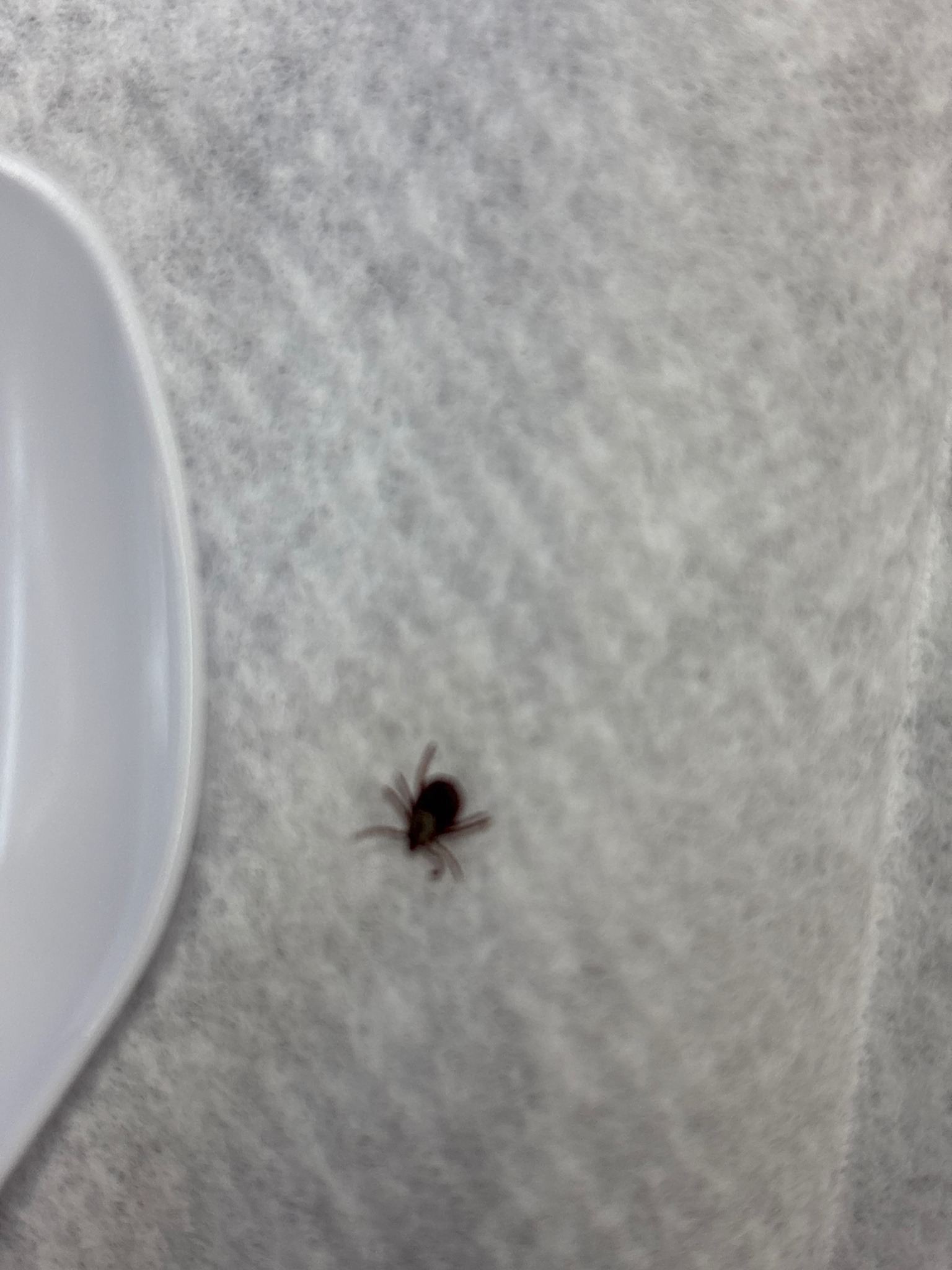
Community identification
Black-legged Tick (also known as a Deer Tick)
Ixodes scapularis
- Order & Family
- Order: Ixodida; Family: Ixodidae
- Size
- Adults are approximately 3-5 mm (unfed), while larvae and nymphs are smaller than 2 mm.
Natural Habitat
Wooded areas, tall grasses, and leaf litter where they wait for hosts.
Diet & Feeding
Obligate blood-feeders; they consume the blood of mammals (including humans), birds, and reptiles.
Behavior Patterns
They engage in "questing" by clinging to vegetation with their rear legs and reaching out with their front legs to latch onto passing hosts. Their life cycle involves four stages: egg, larva, nymph, and adult.
Risks & Benefits
Significant health risk as they are primary vectors for Lyme disease, anaplasmosis, and babesiosis. They provide no direct benefit to humans and serve as a food source for some birds and opossums.