
Community identification
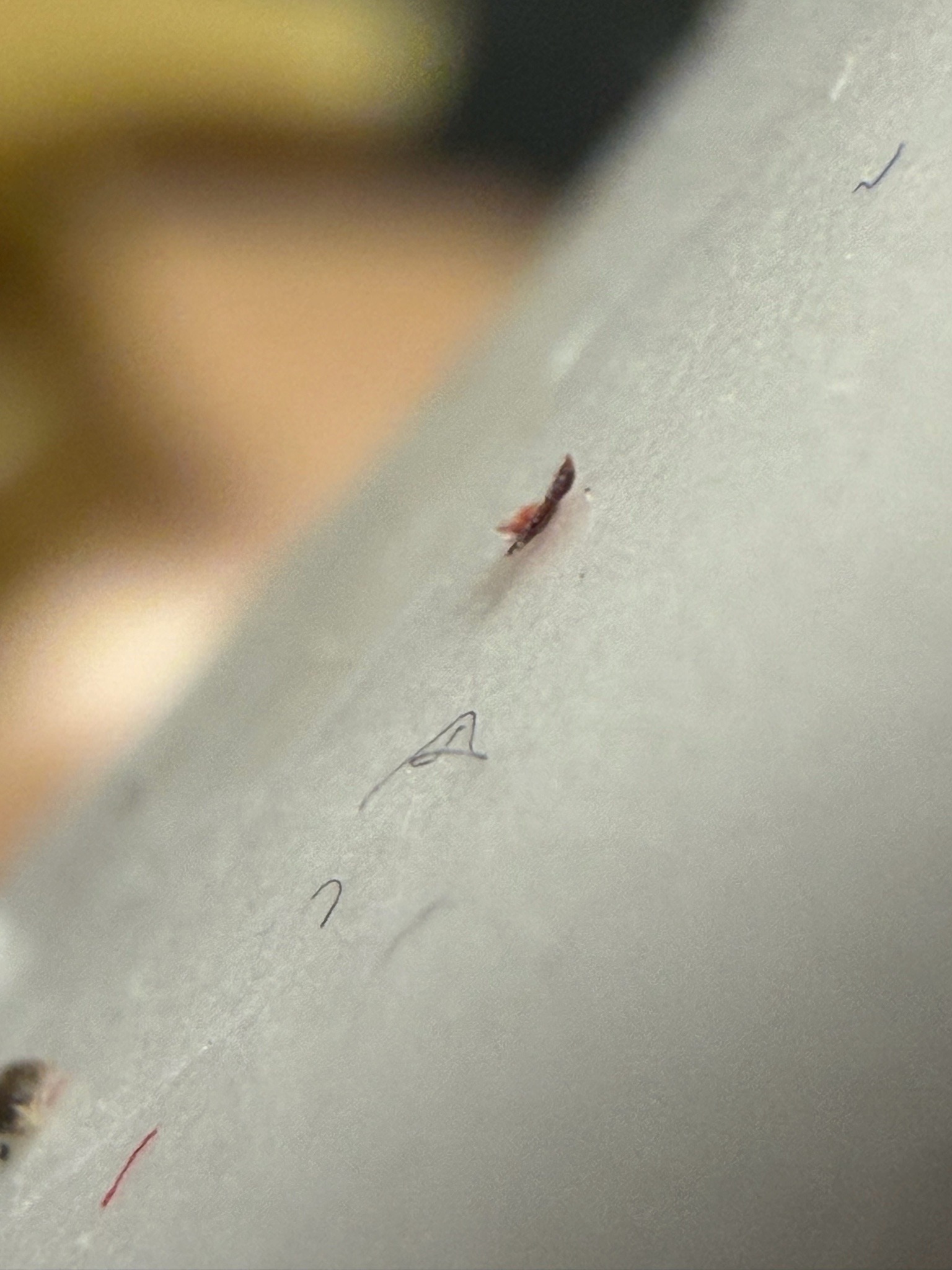
Thrips (likely a flower thrips)
Order-level identification: Thysanoptera; species cannot be confirmed from the image
- Order & Family
- Thysanoptera; likely family Thripidae
- Size
- About 0.5–2 mm long; the pictured insect appears within this range.
Natural Habitat
Leaves, flowers, plant litter, and occasionally indoor plants or windowsills. They are common in warm, dry environments.
Diet & Feeding
Adults and nymphs rasp plant tissue and suck released fluids, feeding on leaves, flowers, pollen, and sometimes fungi or small arthropods.
Behavior Patterns
Slender, fast-moving insects that often hide in flower parts or leaf folds; many species have narrow, fringed wings. They develop through egg, larval, and pupal stages, with several generations annually.
Risks & Benefits
Most are harmless to people, though some species damage crops and transmit plant viruses. Predatory thrips can help suppress mites and other small pests.