
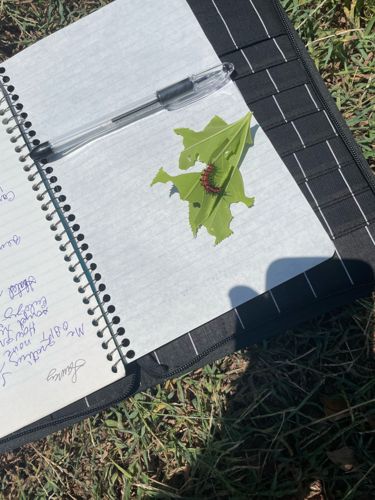
Fritillary Caterpillar (likely Gulf Fritillary or a similar species)
Agraulis vanillae (for Gulf Fritillary, a common species matching the appearance)
- Order & Family
- Order: Lepidoptera, Family: Nymphalidae (Brush-footed butterflies)
- Size
- Caterpillars grow up to 3-4 cm (1.2-1.6 inches) in length. Adult butterflies have a wingspan of 6-9 cm (2.5-3.5 inches).
Natural Habitat
Found in open, sunny areas such as fields, meadows, gardens, and roadsides where their host plant (passion vine) grows. They are common in the southeastern United States and throughout Central and South America.
Diet & Feeding
The caterpillar stage feeds exclusively on the leaves of host plants, most notably various species of passion vines (Passiflora species). The adult butterfly feeds on nectar from a variety of flowering plants.
Behavior Patterns
Fritillary caterpillars are known for their spiny appearance. They are primarily active during the day when feeding. As caterpillars, they are generally slow-moving, primarily focused on consuming their host plants (especially passion vines). Once they pupate, they will transform into a butterfly, which is a strong flier.
Risks & Benefits
Risks: Generally harmless to humans. While spiny, their spines are not typically urticating (stinging) to most people. They can cause damage to passion vines in gardens if populations are high. Benefits: As caterpillars, they are important herbivores in their ecosystem. As adult butterflies, they are significant pollinators, contributing to plant reproduction and biodiversity. They also serve as a food source for various predators.