
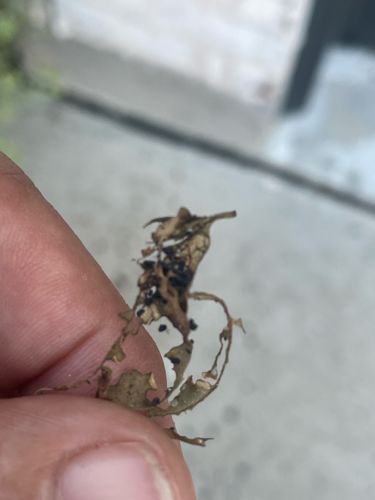
Leafroller (or various species of leafrollers, given the general nature of the evidence)
Various genera and species within the family Tortricidae, e.g., Choristoneura, Archips, Cnephasia. Identification to a specific species without the adult moth or distinct larval features is not possible from this image.
- Order & Family
- Lepidoptera (moths), Tortricidae (tortricid moths or leafroller moths)
- Size
- Larvae (caterpillars) typically range from 10-30 mm (0.4-1.2 inches) in length, depending on the species and instar. Adult moths are usually small to medium-sized, with wingspans up to 30 mm (1.2 inches).
Natural Habitat
Gardens, orchards, forests, fields, and any areas with abundant plant life, as they feed on various host plants.
Diet & Feeding
Herbivorous, feeding on the leaves of a wide variety of plants, including trees, shrubs, and herbaceous plants. The damage seen in the image (skeletonized leaves and holes) is typical of their feeding.
Behavior Patterns
Larvae (caterpillars) typically feed within a silken shelter, often rolling or tying leaves together. They are active primarily during the warmer months.
Risks & Benefits
Risks: Can be significant agricultural or horticultural pests, causing damage to crops, ornamental plants, and trees. Heavy infestations can lead to defoliation and reduced plant vigor or fruit quality. Benefits: In natural ecosystems, they serve as a food source for other insects, birds, and animals. Some species can be beneficial as biological control agents against invasive plants, though this is less common for typical leafrollers.