
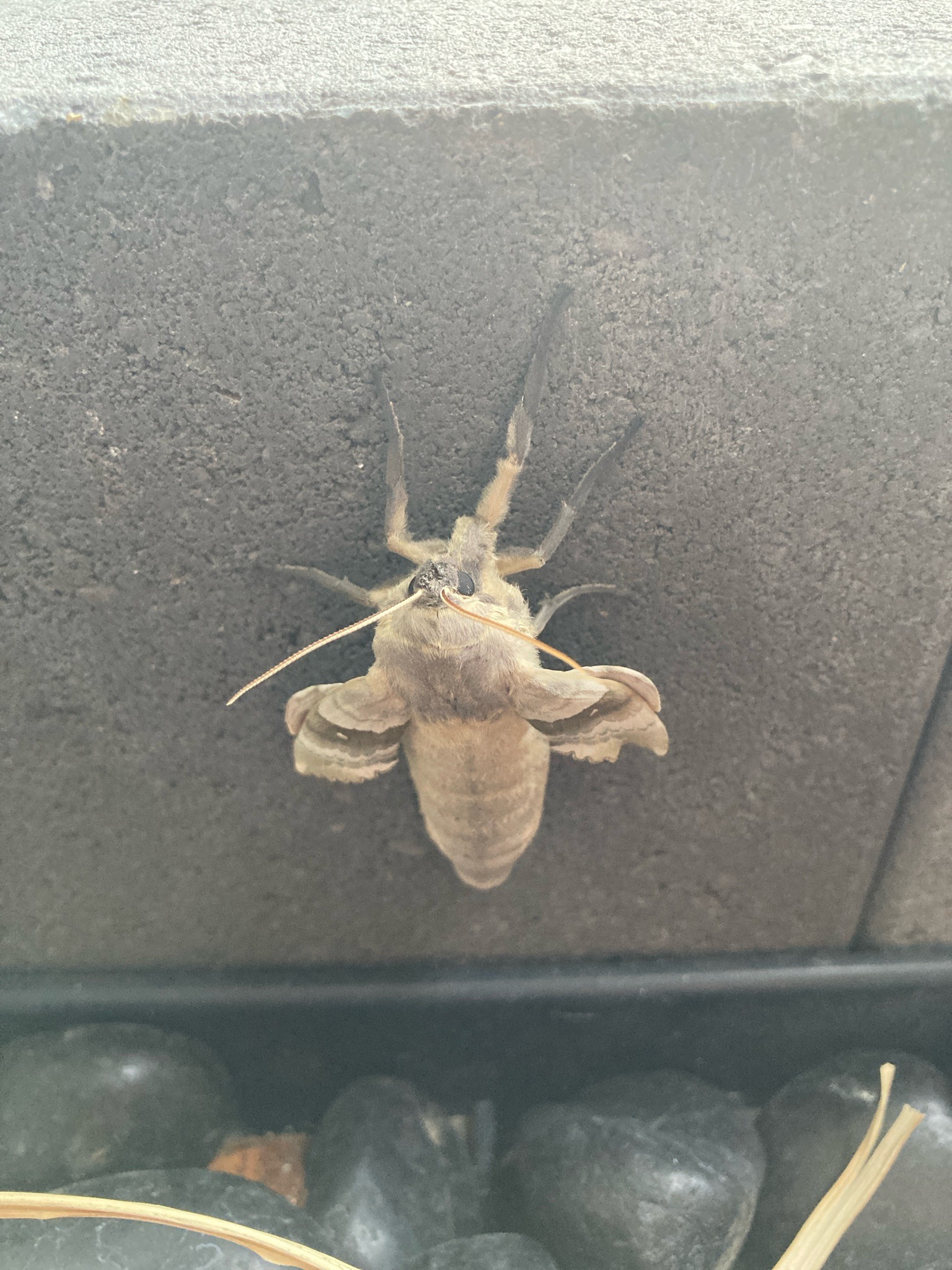
Community identification
Walnut Sphinx Moth
Amorpha juglandis
- Order & Family
- Order: Lepidoptera; Family: Sphingidae
- Size
- Wingspan typically ranges from 4.5 to 7.5 cm (1.8 to 3.0 inches).
Natural Habitat
Deciduous forests, woodlands, and suburban areas where host trees like walnut, hickory, and butternut are present.
Diet & Feeding
Larvae feed on the foliage of walnut, hickory, butternut, and occasionally beech or hazelnut. Adults do not feed.
Behavior Patterns
Primarily nocturnal and attracted to lights at night. Caterpillar larvae are unique for producing a high-pitched 'whistle' sound to deter predators by forcing air through their spiracles.
Risks & Benefits
No risk to humans as they do not bite or sting. They serve as a food source for birds and bats, though the caterpillars can cause minor defoliation of host trees.