
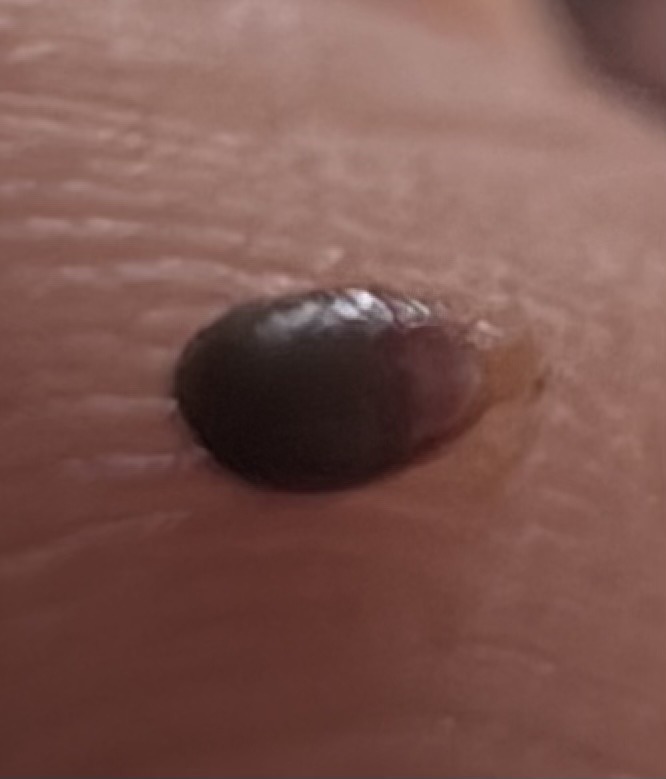
Community identification
Tick (likely an engorged hard tick)
Ixodidae; species cannot be determined from this image
- Order & Family
- Ixodida, family Ixodidae
- Size
- Typically 2–5 mm unfed; engorged females may reach 8–15 mm, depending on species and feeding stage.
Natural Habitat
Grassy, wooded, and brushy habitats; commonly encountered on mammals, birds, pets, and people.
Diet & Feeding
Feeds exclusively on blood from vertebrate hosts. An attached female may remain feeding for several days and swell substantially.
Behavior Patterns
Ticks crawl through vegetation and attach to passing hosts; they do not jump or fly. After feeding, females usually drop off to lay eggs, while some species transmit between hosts during multiple life stages.
Risks & Benefits
May transmit Lyme disease, ehrlichiosis, anaplasmosis, Rocky Mountain spotted fever, and other pathogens; prompt removal reduces risk. They are also natural components of food webs, serving as prey and influencing host populations.