
Community identification
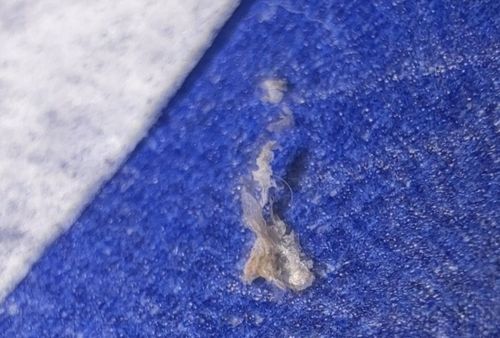
Clothing Moth Larva (likely Case-bearing Clothes Moth)
Tinea pellionella
- Order & Family
- Order: Lepidoptera, Family: Tineidae
- Size
- Larvae are typically 6-10 mm (1/4 to 1/2 inch) in length.
Natural Habitat
Typically found indoors in dark, quiet areas like closets, attics, and underneath furniture. They thrive near fabrics containing natural fibers.
Diet & Feeding
Feeds on keratin-rich materials including wool, silk, fur, feathers, leather, and debris like hair or skin flakes found in dust.
Behavior Patterns
The larva spins a silken case around its body for protection, which it drags along as it moves. They are photophobic (avoid light) and tend to leave irregular holes in fabrics rather than the webbing associated with webbing clothes moths.
Risks & Benefits
Risks: Major household pest that destroys clothing, carpets, and upholstery made of animal fibers. Benefits: No significant ecological benefit indoors; in nature, they aid in breaking down animal carcasses and debris.