
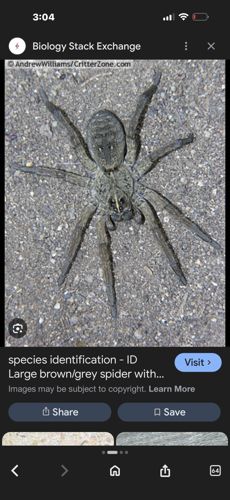
Community identification
Carolina Wolf Spider
Hogna carolinensis
- Order & Family
- Order Araneae, Family Lycosidae
- Size
- Body length typically ranges from 22 to 35 mm (up to 1.4 inches), making it the largest wolf spider in North America.
Natural Habitat
Found in various habitats across North America, including grasslands, deserts, woodlands, and suburban areas; they often live in deep burrows.
Diet & Feeding
Carnivorous; hunts insects, other spiders, and occasionally small vertebrates like tiny lizards or frogs. They are active hunters that do not use webs to catch prey.
Behavior Patterns
They are nocturnal hunters with excellent eyesight. Females carry their egg sacs attached to their spinnerets and then carry their spiderlings on their backs for protection after they hatch.
Risks & Benefits
Benefits the ecosystem by controlling pest insect populations; while they are venomous and can bite if provoked, their bite is generally not medically significant for humans, though it can be painful.