
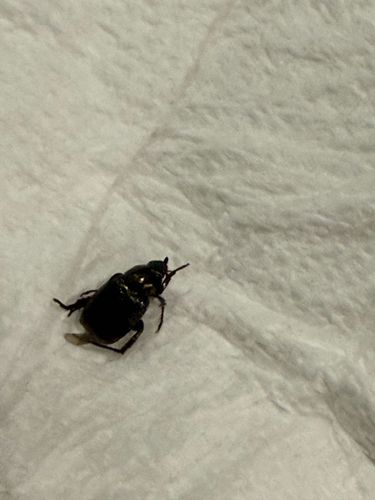
Dung Beetle
Various species, often in genera like Scarabaeus, Geotrupes, or Onthophagus.
- Order & Family
- Order: Coleoptera, Family: Scarabaeidae (or specific subfamilies like Scarabaeinae for true dung beetles)
- Size
- Typically from a few millimeters to several centimeters, depending on the species. The one in the image appears to be in the smaller to medium range.
Natural Habitat
Found in various habitats worldwide where mammalian dung is available, including grasslands, forests, and agricultural areas.
Diet & Feeding
Adults primarily feed on dung, particularly that of herbivores. Larvae also develop and feed within a dung ball.
Behavior Patterns
Dung beetles are known for their distinctive behavior of rolling dung into balls, which they then bury either for food or as a brood chamber for their eggs. This behavior is crucial for nutrient cycling. They are typically nocturnal or crepuscular.
Risks & Benefits
Dung beetles are highly beneficial to ecosystems. They contribute significantly to nutrient cycling, soil aeration, and seed dispersal by burying dung. This also helps control fly populations that breed in dung. They pose no direct risks to humans.