
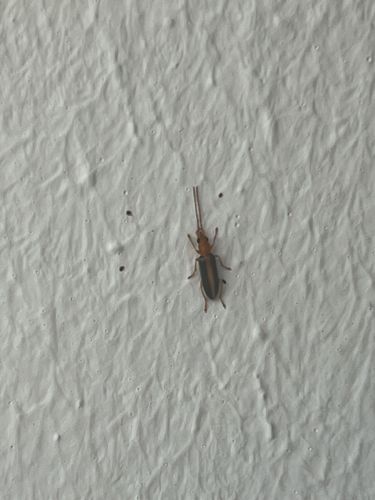
Rove Beetle (likely Paederus species, given the distinct head and pronutum coloration and the commonness of these encounters)
Paederus species (exact species identification is difficult from the image alone)
- Order & Family
- Order: Coleoptera, Family: Staphylinidae
- Size
- Typically 6-10 mm in length for Paederus species, though general rove beetles (Staphylinidae) can range from less than 1 mm to over 30 mm.
Natural Habitat
Rove beetles are found in a wide variety of habitats, including forests, grasslands, agricultural fields, wetlands, and coastal areas. Paederus species are commonly found near water bodies and in damp environments. They are often attracted to artificial lights at night, bringing them into human proximity.
Diet & Feeding
Most rove beetles are predators, feeding on other small insects and mites. Some species may feed on decaying plant or animal matter, fungi, or pollen, but Paederus species are generally predatory.
Behavior Patterns
Adult female rove beetles of the genus Paederus can produce pederin, a potent amide toxin, which they store in their hemolymph. When disturbed or crushed against the skin, they release this toxin, causing a blistering dermatitis known as paederus dermatitis or 'rove beetle dermatitis'. These beetles are attracted to lights at night and may inadvertently enter homes.
Risks & Benefits
The main risk associated with Paederus rove beetles is paederus dermatitis, a skin irritation caused by the pederin toxin when the beetle is crushed. This can result in redness, itching, burning, and blistering which usually resolves within a week but can leave temporary discoloration. They do not bite or sting. From an ecological perspective, many rove beetles, including some predatory species, are beneficial as they act as natural predators of various agricultural pests.