
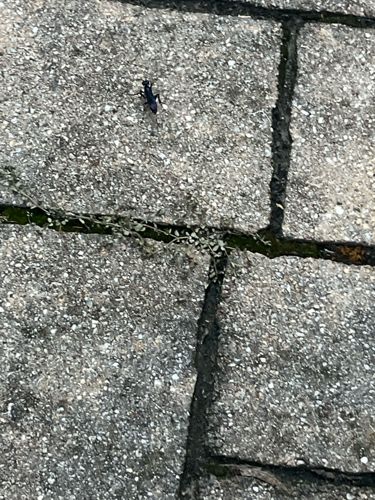
Rove Beetle
Staphylinidae (family, as specific genus/species is hard to determine from the image)
- Order & Family
- Order: Coleoptera, Family: Staphylinidae
- Size
- Most rove beetles are small to medium-sized, ranging from 1 mm to 35 mm in length, though many commonly observed species are between 2-8 mm.
Natural Habitat
Rove beetles are found in a wide variety of habitats globally, including forests, grasslands, agricultural fields, gardens, wetlands, and coastal areas. They prefer moist environments and are commonly found under stones, logs, leaf litter, bark, decaying fungi, carrion, and manure.
Diet & Feeding
The vast majority of rove beetles are predatory, feeding on other small insects, insect eggs, larvae, earthworms, slugs, and other invertebrates. Some species are scavengers, feeding on decaying organic matter, fungi, or carrion. A few are parasitic or feed on plants.
Behavior Patterns
Adult rove beetles are typically active predators, often seen scurrying rapidly over surfaces or flying. Many species are nocturnal. They can be found in various microhabitats, often under stones, leaf litter, bark, or in decaying organic matter. If disturbed, some species may raise their abdomen to mimic scorpions or spray defensive chemicals.
Risks & Benefits
Benefits: Many rove beetle species are beneficial as natural predators of pest insects in agriculture and gardens, helping to control populations of aphids, mites, fly larvae, and other common pests. They also play a role in decomposition and nutrient cycling. Risks: A few species, particularly the genus Paederus, can produce a toxic chemical called pederin, which can cause skin irritation (dermatitis linearis) if the beetle is crushed against the skin.