
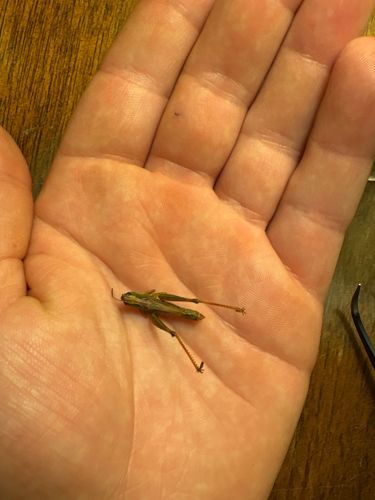
Grasshopper
Varies widely depending on the species (e.g., Melanoplus differentialis, Schistocerca gregaria)
- Order & Family
- Order: Orthoptera, Family: Acrididae (short-horned grasshoppers) or Tettigoniidae (long-horned grasshoppers/katydids). Based on the image, it most closely resembles a short-horned grasshopper (Acrididae) due to the relatively short antennae.
- Size
- Typically 1 to 7 cm (0.4 to 2.8 inches) in length, though some larger species can exceed this.
Natural Habitat
Grasshoppers are found in diverse habitats worldwide, including grasslands, meadows, forests, agricultural fields, and deserts. They prefer areas with abundant vegetation for food and cover.
Diet & Feeding
Grasshoppers are primarily herbivorous, feeding on a wide variety of plants, including grasses, crops, and other foliage. Some species can be polyphagous, eating many different types of plants, while others are more selective.
Behavior Patterns
Grasshoppers are primarily diurnal, active during the day. They communicate through stridulation (rubbing body parts together) to attract mates or warn others. They are known for their powerful jumping ability, which they use to escape predators. Many species can also fly. They undergo incomplete metamorphosis, meaning they hatch from an egg as a nymph that resembles a small adult and grows through several molts.
Risks & Benefits
Risks: Some species of grasshoppers, particularly under certain environmental conditions, can form large swarms (locusts) that cause extensive damage to crops and vegetation, leading to significant economic losses and food shortages. Benefits: Grasshoppers serve as an important food source for various animals, including birds, reptiles, amphibians, and other insects, thus playing a role in the food web. They also contribute to nutrient cycling in ecosystems by consuming plant matter.