
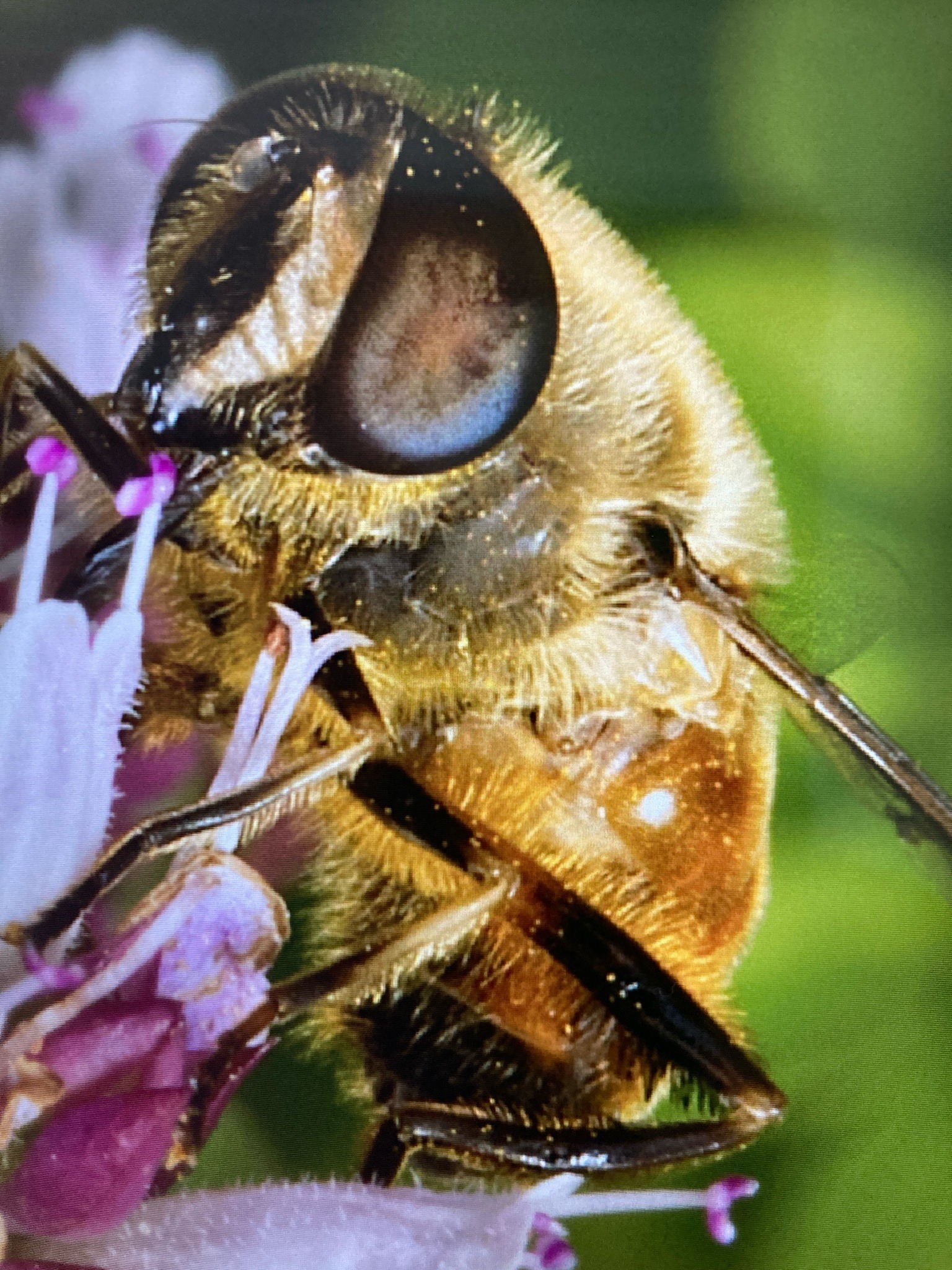
Community identification
Honey bee
Apis mellifera
- Order & Family
- Hymenoptera; Apidae
- Size
- Workers are typically 10–15 mm long; queens are larger, about 15–20 mm, and drones about 15–17 mm.
Natural Habitat
Flower-rich habitats including gardens, meadows, orchards, forests, and urban areas; colonies live in managed hives or natural cavities.
Diet & Feeding
Adults consume nectar and pollen; larvae are fed glandular secretions and processed pollen. They collect nectar for honey production and pollen for colony nutrition.
Behavior Patterns
Highly social, colony-living insects with worker, drone, and queen castes. Workers forage, communicate food locations through dances, defend the nest, and swarm to establish new colonies.
Risks & Benefits
Females can deliver painful stings, with heightened risk for allergic individuals. They are major pollinators of wild plants and crops and produce honey, beeswax, and propolis.