
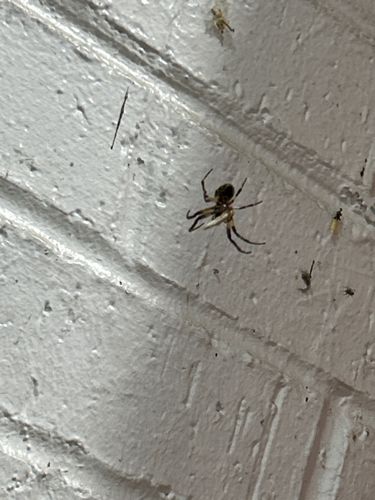
Cellar Spider / Daddy Long-legs Spider
Pholcus phalangioides
- Order & Family
- Order: Araneae, Family: Pholcidae
- Size
- Body length typically ranges from 2-10 mm (0.08-0.4 inches), but their legs are very long, often giving them a much larger appearance, with leg spans up to 5-7 cm (2-2.8 inches).
Natural Habitat
Commonly found in dark, damp, and undisturbed places, such as cellars, basements, crawl spaces, garages, sheds, and sometimes even in living areas of houses, particularly in corners or behind furniture. They prefer stable environments with high humidity.
Diet & Feeding
Mainly insects and other spiders. They capture prey that gets entangled in their webs. They are opportunistic predators and will consume a variety of small invertebrates.
Behavior Patterns
Cellar spiders are known for their messy, irregular webs, which they often build in corners of rooms, basements, and other undisturbed areas. They are quite passive and tend to hang upside down in their webs. If disturbed, they will often vibrate rapidly in their web, making themselves appear blurry to a potential predator, or they may drop down from the web to escape. They are also known to hunt and eat other spiders, including more venomous ones like the black widow, by wrapping them in silk.
Risks & Benefits
Cellar spiders are largely harmless to humans. Their fangs are very small, and their venom is not considered medically significant to people. They are beneficial as they feed on a variety of household pests, including flies, mosquitoes, and other spiders (including venomous ones like black widows in some regions), thus acting as natural pest control. The only 'risk' might be perceived byarachnophobes or the annoyance of their dusty, messy webs in homes.