
Community identification
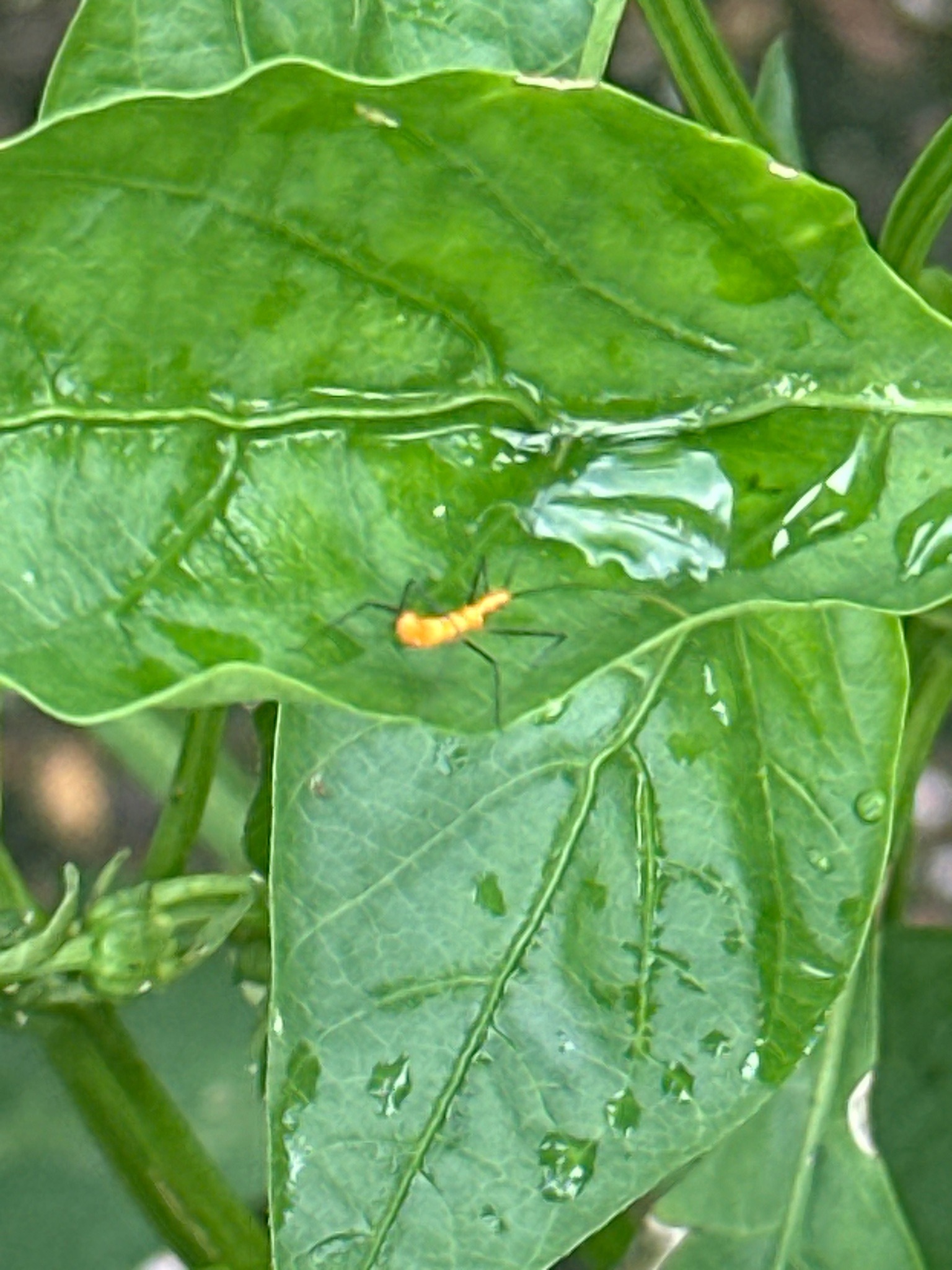
Orange weevil larva (tentative identification)
Likely a Curculionidae larva; species indeterminate from the image
- Order & Family
- Coleoptera; Curculionidae (weevil family)
- Size
- Approximately 5–10 mm long in the pictured stage; adult size varies widely, commonly 2–20 mm.
Natural Habitat
On or within plant foliage, stems, roots, seeds, or soil, depending on species. The pictured larva is on a cultivated broadleaf plant.
Diet & Feeding
Larvae usually feed internally on roots, stems, seeds, or plant tissue; adults may chew leaves, buds, or fruits. Diet is species-specific.
Behavior Patterns
Typically slow-moving, soft-bodied, and legless or nearly legless; many larvae hide in plant tissue or soil and pupate before emerging as adults.
Risks & Benefits
Some weevils are serious agricultural pests, damaging roots, foliage, seeds, or stored crops. Others contribute to decomposition or have value in biological control; a definitive species identification requires a clearer image and location.