
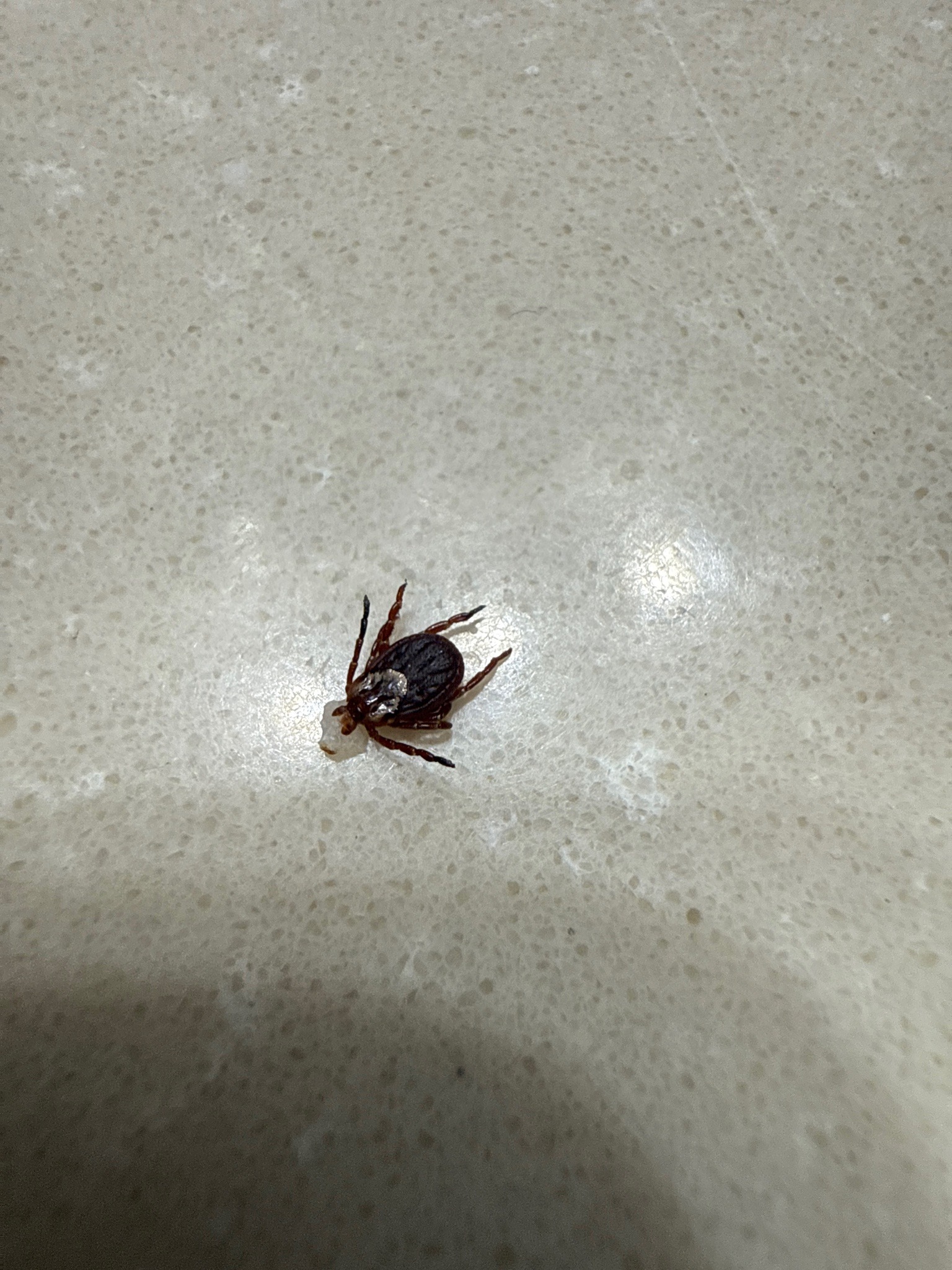
Community identification
American Dog Tick
Dermacentor variabilis
- Order & Family
- Ixodida: Ixodidae
- Size
- 3 mm to 5 mm (unfed), up to 15 mm (engorged female)
Natural Habitat
Areas with little to no tree cover, such as grassy fields, walkways, and trails, often near urban environments.
Diet & Feeding
Blood of mammals, including dogs, livestock, and humans.
Behavior Patterns
Three-host life cycle (larva, nymph, and adult each feed on a different host). They engage in 'questing' by climbing vegetation and waiting for a host to pass.
Risks & Benefits
Primary vector for Rocky Mountain spotted fever and tularemia. Can cause tick paralysis in dogs and humans. They provide no significant benefits to human ecosystems.