
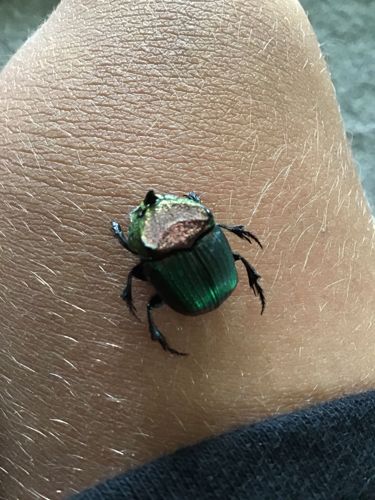
Dung Beetle (likely a species of Scarab beetle)
Many species, e.g., Onthophagus taurus (a common European species) or Phalacronothus (a genus within Scarabaeidae). Identifying the exact species from the image alone is difficult, but it clearly belongs to the dung beetle group.
- Order & Family
- Order: Coleoptera, Family: Scarabaeidae (Scarabs)
- Size
- Typically ranges from 5 mm to 30 mm, though some larger species can be up to 60 mm.
Natural Habitat
Dung beetles are found in a wide variety of habitats, including grasslands, forests, deserts, and farmlands, essentially anywhere where there is a presence of animal dung.
Diet & Feeding
Dung beetles feed primarily on dung (feces) of herbivores and omnivores. Some species may also feed on decaying plant matter, fungi, or carrion.
Behavior Patterns
Dung beetles are known for their unique behavior of rolling dung into spherical balls, which they then bury. These balls serve as food for themselves or as brood chambers for their larvae. This burying behavior helps with nutrient cycling and seed dispersal. Some species are 'rollers' (like the true dung beetles), others are 'tunnelers' (burying dung directly where they find it), and some are 'dwellers' (living within the dung pile).
Risks & Benefits
Benefits: Dung beetles provide significant ecological services. They improve soil aeration and fertility by burying dung, help control fly populations by removing breeding grounds, and aid in seed dispersal. They are largely harmless to humans. Risks: No significant risks to humans from these beetles.