
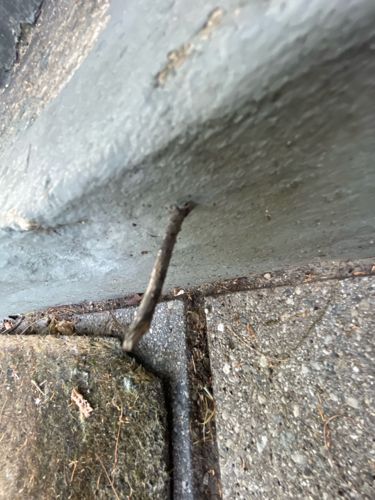
Inchworm (Geometer Moth Larva)
Various species within the family Geometridae (e.g., Operophtera brumata for Winter Moth, Paleacrita vernata for Spring Cankerworm for common examples)
- Order & Family
- Order: Lepidoptera, Family: Geometridae
- Size
- Typically 1 to 3 cm (0.4 to 1.2 inches) in length, though some larger species can reach up to 5 cm (2 inches).
Natural Habitat
Inchworms are found globally in a wide range of habitats where their host plants grow, including forests, woodlands, gardens, agricultural fields, and urban areas.
Diet & Feeding
Strictly herbivorous. They feed on the leaves of various plants, trees, and shrubs. Specific diet depends on the species, but many are generalists while others are specialized feeders.
Behavior Patterns
Inchworms move by extending their front body, grasping with their front legs, then drawing their hind legs forward, creating a loop with their body. This gives them their characteristic 'looping' or 'measuring' gait. They are often masters of camouflage, blending seamlessly with twigs or leaves, and may remain motionless for extended periods to avoid detection, sometimes even propping themselves up at an angle to mimic a twig.
Risks & Benefits
Risks: In large outbreaks, some species of inchworms can be considered pests as they defoliate trees and plants, causing significant damage to agriculture and forestry. Benefits: As larvae, they serve as a food source for many birds, insects, and other predators, playing a role in the food web. Adult moths are pollinators for various plants. They are also an indicator species for environmental health in some ecosystems.