
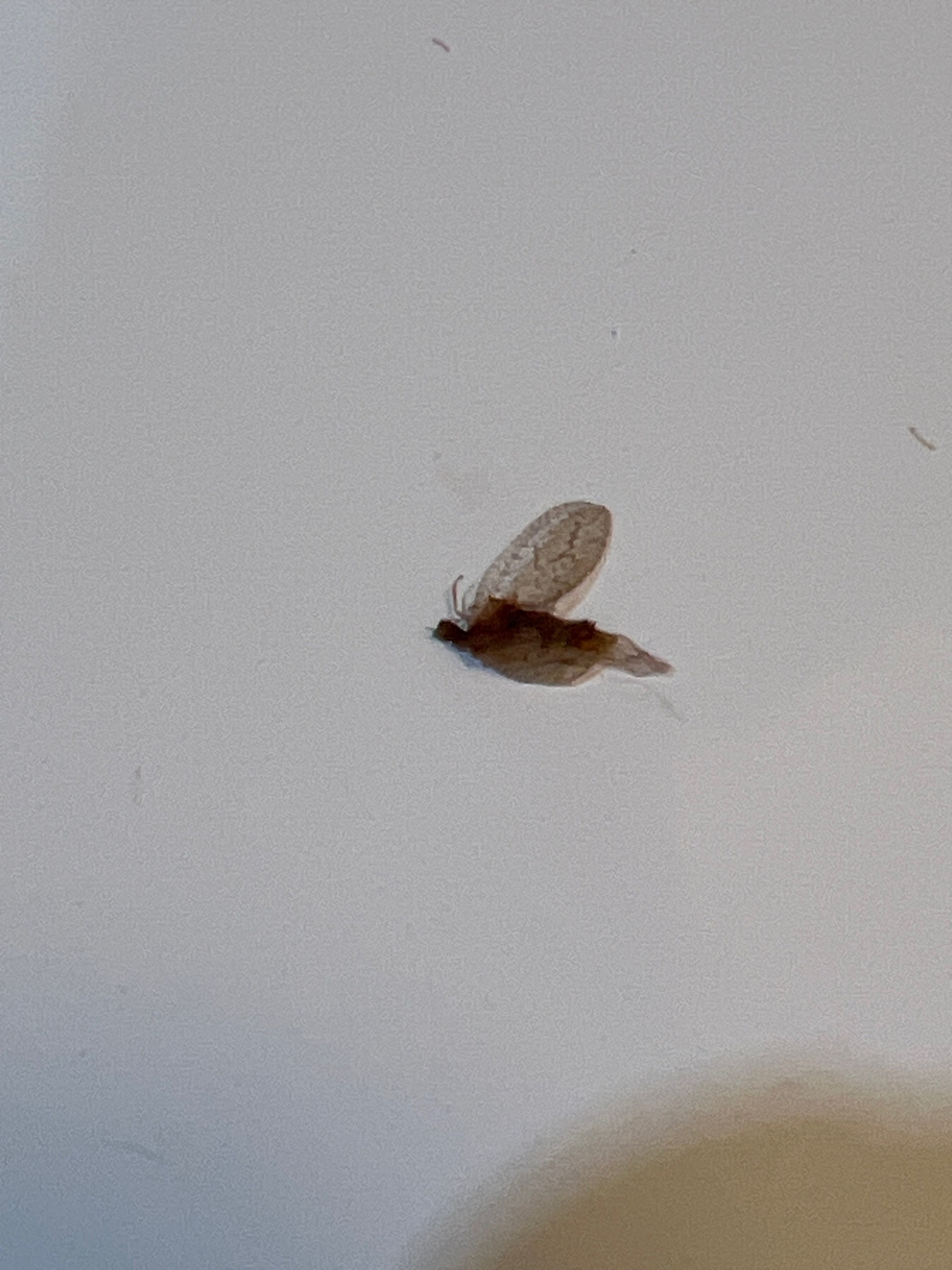
Community identification
Brown lacewing
Family Hemerobiidae
- Order & Family
- Neuroptera: Hemerobiidae
- Size
- 6 to 12 mm in length
Natural Habitat
Found in gardens, woodlands, and agricultural fields, often on foliage and trees.
Diet & Feeding
Both adults and larvae are predatory, primarily feeding on soft-bodied insects like aphids, mealybugs, and mites.
Behavior Patterns
Active mainly at night, they exhibit a holometabolous life cycle with egg, larva, pupa, and adult stages.
Risks & Benefits
Beneficial as a biological control agent in agriculture and gardening because they reduce pest populations; they pose no risk to humans.