
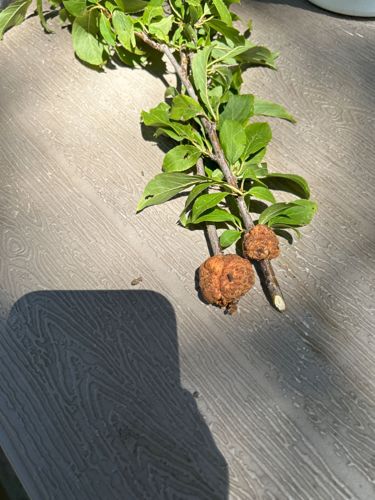
Oak Gall Wasp (specifically, the gall appears to be an Oak Apple Gall or a similar type common on oaks)
There are many species of oak gall wasps in the Cynipidae family, each producing distinct galls. Without examining the adult insect or specific host details, a precise scientific name is difficult. Examples include Amphibolips confluenta (Oak Apple Gall Wasp) or Callirhytis quercusellipsoidi (Oak Ellipsoid Gall Wasp).
- Order & Family
- Order: Hymenoptera, Family: Cynipidae (Gall Wasps)
- Size
- The insect itself (wasp) is typically small, often 2-5 mm. The galls they create can vary significantly in size, from a few millimeters to several centimeters in diameter, as seen in the image (the galls are roughly 2-3 cm in diameter).
Natural Habitat
Found wherever their host trees grow. Oak gall wasps are typically found on oak trees, as their name suggests. The galls can be observed on leaves, twigs, branches, or acorns of oak trees.
Diet & Feeding
Larvae feed on the plant tissue inside the gall, which is formed by the host tree in response to the wasp larva. Adult wasps typically do not feed or feed on nectar/honeydew.
Behavior Patterns
The visible structures are galls formed by the insect. The female wasp lays an egg within the plant tissue. The plant's growth is stimulated by chemicals released by the larva, forming the gall that protects and nourishes the developing insect. Once mature, the adult wasp chews its way out of the gall.
Risks & Benefits
Risks: Oak galls are generally considered harmless to the overall health of mature oak trees, even in cases of heavy infestation. While they can sometimes cause aesthetic damage or minor twig dieback, they rarely kill the tree. Benefits: Galls themselves can provide microhabitats for other insects. Some species of gall wasps are parasitized by other beneficial insects, contributing to the food web. The galls can also be an interesting botanical curiosity.