
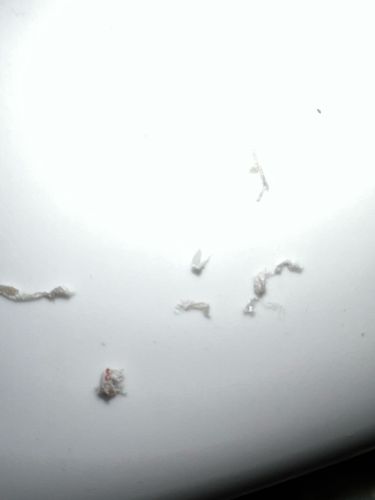
Case-bearing Clothes Moth Larva
Tinea pellionella
- Order & Family
- Lepidoptera (moths and butterflies), Tineidae (fungus moths and clothes moths)
- Size
- Larvae can reach up to 1/2 inch (12-13 mm) in length. The case they carry is typically slightly larger than the larva itself, around 1/4 to 1/2 inch.
Natural Habitat
Indoor environments, particularly dark, undisturbed areas such as closets, attics, storage chests, and behind furniture. They are found where natural fibers and detritus are present.
Diet & Feeding
Keratin-containing materials in natural fibers, including wool, silk, fur, feathers, hair, leather, and felt. They can also feed on lint, dust, and synthetic blends that contain natural fibers or food residues.
Behavior Patterns
The larva constructs a portable case from silk and fragments of the material it is feeding on, expanding it as it grows. The larva rarely leaves its case, only protruding its head and legs to move and feed. They are often found on horizontal surfaces or hanging from ceilings, walls, or suspended items when seeking a pupation site. Adults are typically poor flyers and are more likely to run or hop.
Risks & Benefits
Potential risks include significant damage to textiles, clothing, carpets, upholstered furniture, and other natural fiber-based items. They are considered a common household pest. There are no known direct benefits to humans or the ecosystem from their presence indoors.