
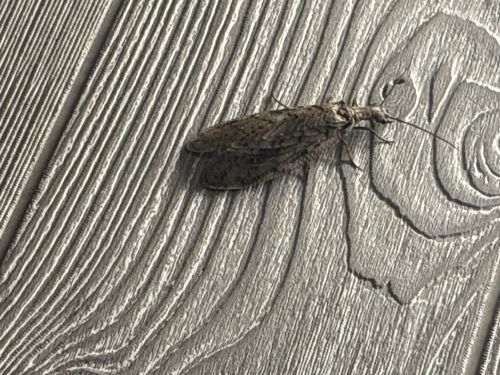
Caddisfly
There are over 14,500 described species within the order Trichoptera. A specific scientific name cannot be assigned without further identification.
- Order & Family
- Order: Trichoptera; Family: Varies widely within the order, example families include Limnephilidae (Limnephilids) or Hydropsychidae (Net-spinning caddisflies).
- Size
- Adult caddisflies typically range from a few millimeters to about 3 cm (1.2 inches) in body length, with wingspans up to 7 cm (2.8 inches) for larger species. Larvae also vary in size but are generally similar in length to adults.
Natural Habitat
Caddisflies are aquatic insects during their larval and pupal stages, inhabiting freshwater environments such as streams, rivers, lakes, and ponds. Adults are terrestrial but remain near water bodies.
Diet & Feeding
Adult caddisfly diets vary; some do not feed, while others may consume nectar or other liquids. Larval diets are diverse and depend on the species; they can be herbivorous (grazing on algae, detritus), predatory (on smaller aquatic invertebrates), or omnivorous (filter feeders).
Behavior Patterns
Adult caddisflies are generally nocturnal and attracted to lights. They are often short-lived as adults, focusing on reproduction. Larvae typically live underwater, building cases from silk and various materials (sand, pebbles, plant fragments) which they carry with them for protection. They undergo complete metamorphosis.
Risks & Benefits
Caddisflies pose no direct risks to humans. As for benefits, their presence is a good indicator of healthy, unpolluted freshwater ecosystems because many species are sensitive to water quality. Larvae are an important food source for fish and other aquatic organisms. Fly fishermen often mimic caddisfly adults and larvae.