
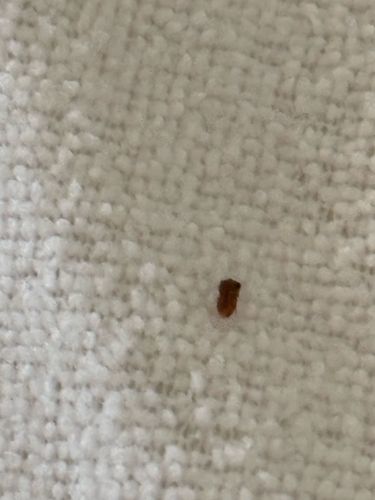
Carpet Beetle (likely Varied Carpet Beetle or Black Carpet Beetle)
Antrenus verbasci (Varied Carpet Beetle) or Attagenus unicolor (Black Carpet Beetle) are common species, but challenging to distinguish conclusively from this image.
- Order & Family
- Order: Coleoptera, Family: Dermestidae
- Size
- Adults: 2-5 mm (approximately 1/16 to 1/4 inch). Larvae: up to 5 mm.
Natural Habitat
Indoors, carpet beetles are found in quiet, undisturbed areas within homes, museums, warehouses, and other buildings. This includes carpets, rugs, upholstered furniture, clothing in closets, pantries, and sometimes even within wall voids or air ducts. Outdoors, adult carpet beetles are common on flowering plants.
Diet & Feeding
Larvae primarily feed on animal products and natural fibers, including wool, silk, leather, fur, feathers, and even dried animal carcasses or insect collections. They can also feed on stored food products like grains and pet food. Adult carpet beetles feed on pollen and nectar from outdoor plants.
Behavior Patterns
Carpet beetles undergo complete metamorphosis, meaning they have egg, larval, pupal, and adult stages. The larval stage is responsible for most of the damage to household items as they feed on natural fibers. Adults are attracted to light and are often found near windows, while larvae prefer dark, undisturbed areas like under furniture, in closets, or around baseboards. Adults are good fliers and can enter homes through open doors or windows.
Risks & Benefits
Risks: Carpet beetles are considered household pests due to their destructive feeding habits on a wide range of natural fibers and stored products. They can cause significant damage to clothing, carpets, furniture, and museum specimens, leading to economic loss. While not directly harmful to humans (they don't bite or sting), some individuals might experience dermatological reactions (dermatitis) from contact with larval hairs. Benefits: In nature, carpet beetles (specifically larvae) play a role as scavengers, breaking down organic matter like animal remains.