
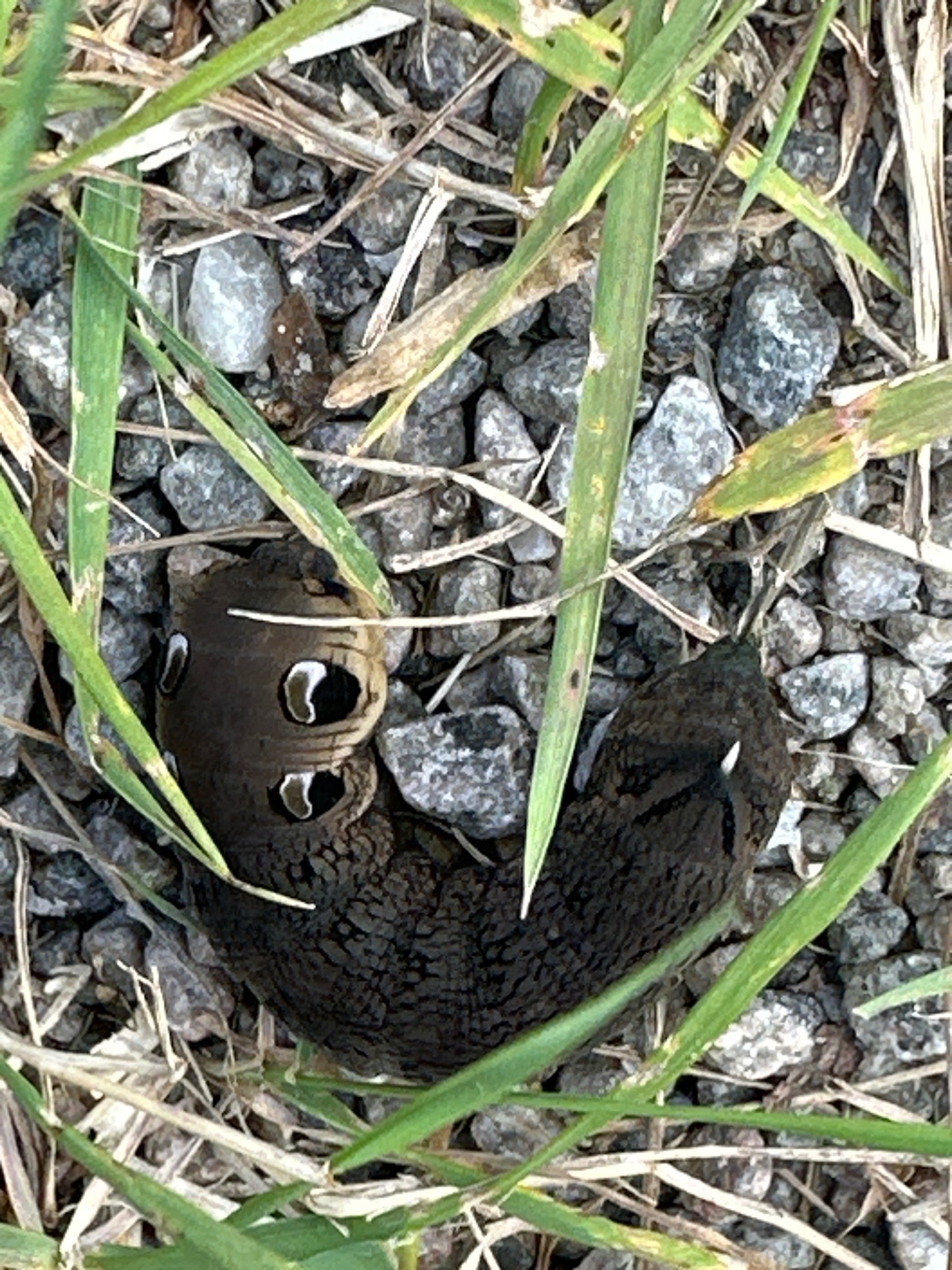
Community identification
Black slug (likely leopard slug)
Limax maximus
- Order & Family
- Stylommatophora; Limacidae
- Size
- Usually 10–20 cm (4–8 in) fully extended; individuals vary in color and spotting pattern.
Natural Habitat
Moist, sheltered terrestrial habitats such as gardens, lawns, woodlands, compost, and beneath rocks or debris. Often active on the surface at night or after rain.
Diet & Feeding
Omnivorous and scavenging, eating fungi, decaying plant matter, carrion, and occasionally living vegetation. It may also prey on smaller slugs and other soft-bodied invertebrates.
Behavior Patterns
Nocturnal and moisture-dependent, retreating into cracks or cover during dry conditions. Hermaphroditic adults mate by exchanging sperm, and eggs are laid in moist sheltered sites.
Risks & Benefits
Harmless to people and not venomous. It can damage garden plants, but also decomposes organic material and may consume pest slugs and snails.