
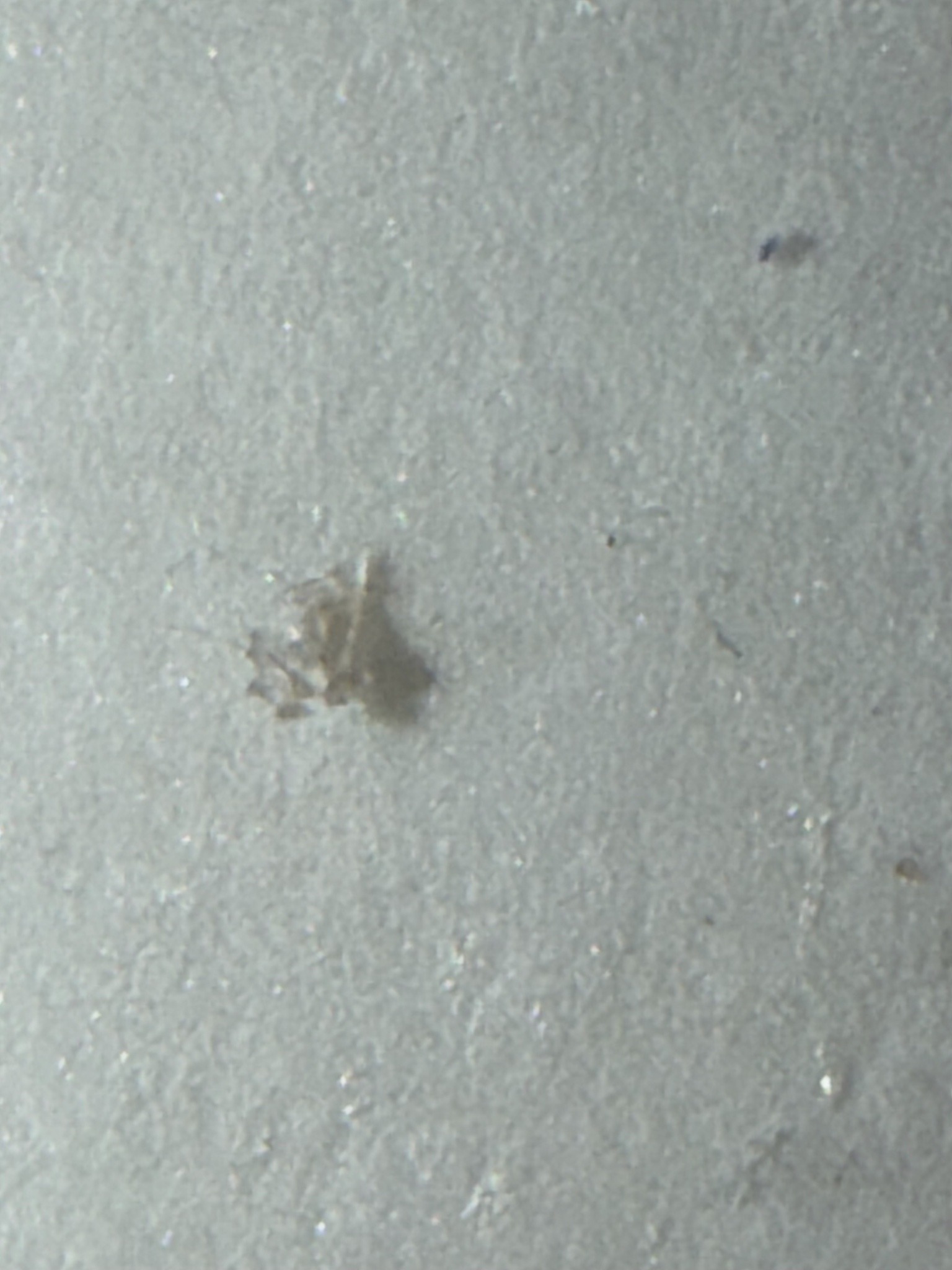
Community identification
Booklouse (psocid), likely a barklouse
Order Psocoptera; species uncertain from the image, possibly Liposcelis sp.
- Order & Family
- Psocodea (formerly Psocoptera), family Liposcelididae (tentative)
- Size
- About 0.5–2 mm long; this specimen appears near the small end of that range.
Natural Habitat
Humid indoor areas, especially near stored paper, cardboard, books, cupboards, and mold; also occurs under bark and in leaf litter.
Diet & Feeding
Feeds mainly on mold, fungal spores, algae, and microscopic organic debris rather than fabric or wood.
Behavior Patterns
Wingless, soft-bodied, and slow-moving; populations increase in damp conditions and decline when humidity is reduced. They may occur in clusters around moldy materials.
Risks & Benefits
Harmless to people and pets and do not bite or transmit disease. Large numbers indicate excess moisture or mold and can contaminate stored foods or paper, but they also help recycle organic matter.