
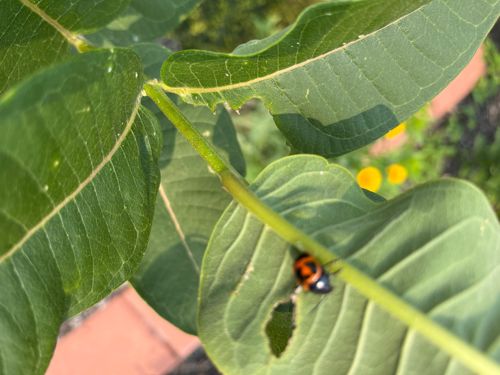
Red Milkweed Beetle
Tetraopes tetrophthalmus
- Order & Family
- Order: Coleoptera, Family: Cerambycidae (Longhorn Beetles)
- Size
- Typically around 8 to 15 mm (0.3 to 0.6 inches) in length.
Natural Habitat
Fields, meadows, gardens, and other areas where milkweed plants (Asclepias species) grow. They are entirely dependent on milkweed for survival.
Diet & Feeding
Milkweed leaves. Both adults and larvae feed on the leaves, sometimes creating holes, as seen in the image. They are specialized herbivores.
Behavior Patterns
Milkweed leaf beetles are often found on milkweed plants, which are their host plants. They are typically slow-moving. Both adults and larvae feed on milkweed. Females lay eggs on milkweed leaves or stems, and the larvae develop on the plant.
Risks & Benefits
Risks: Generally considered harmless to humans and not a pest unless milkweed cultivation is the primary goal and large populations are present, in which case they can cause defoliation. Benefits: Part of the natural food chain and can contribute to the biodiversity of ecosystems where milkweed is present. Their feeding can help regulate milkweed populations, though usually not to a detrimental extent for the plant's survival.