
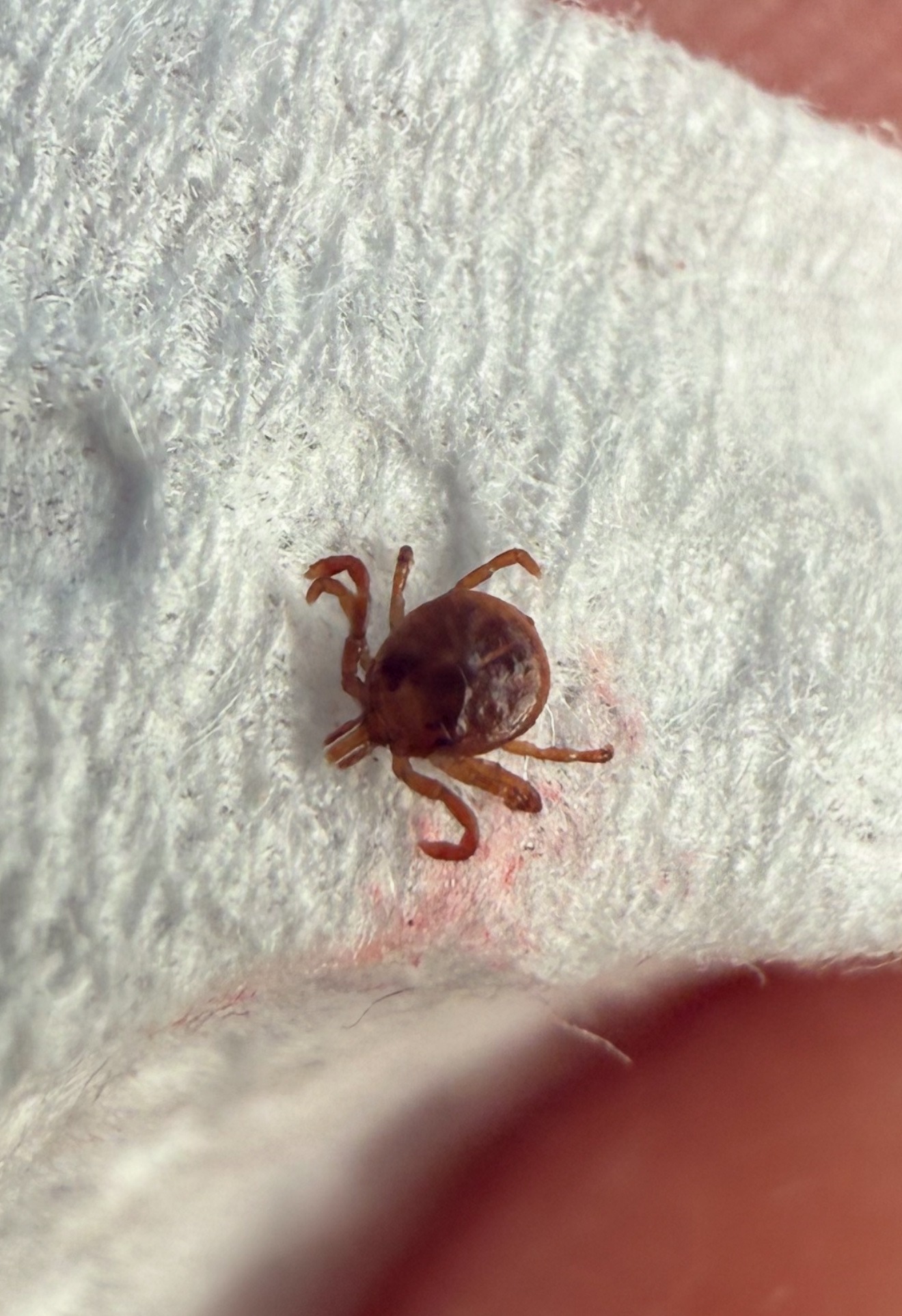
Community identification
Soft tick (likely a spinose ear tick or related species)
Argas spp. (species-level identification requires microscopy)
- Order & Family
- Ixodida, Argasidae
- Size
- Usually 2–10 mm unfed, expanding substantially after feeding.
Natural Habitat
Sheltered cracks, animal nests, bird roosts, livestock housing, and occasionally homes; many species feed on birds or mammals.
Diet & Feeding
Blood-feeding ectoparasite of birds, mammals, and sometimes humans; adults and nymphs feed intermittently rather than remaining attached for days.
Behavior Patterns
No visible hard dorsal shield or prominent mouthparts distinguishes soft ticks from hard ticks. They hide during daylight, emerge to feed briefly, and may survive long periods between meals.
Risks & Benefits
Bites can cause irritation, allergic reactions, anemia, or secondary infection; some species transmit pathogens, though risk depends on location and species. They have limited ecosystem benefits as prey for other animals.