
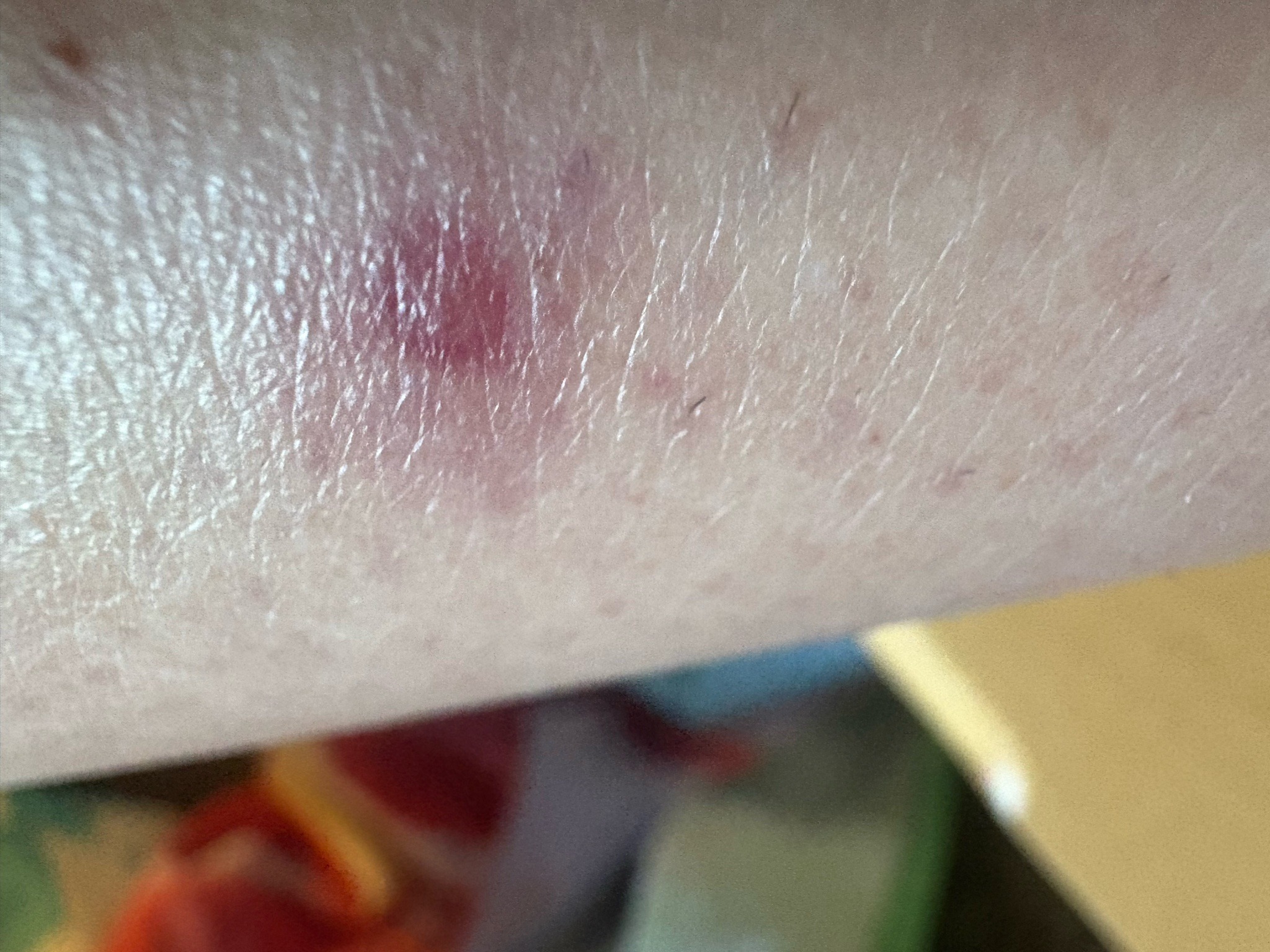
Community identification
Inconclusive (Requires actual bug specimen/image)
Unknown
- Order & Family
- Unknown
- Size
- Typically 1mm to 10mm for common biting insects
Natural Habitat
Varied depending on the species; many biting insects are found indoors (e.g., bed bugs) or outdoors in vegetation (e.g., mosquitoes, ticks)
Diet & Feeding
The mark suggests a blood-feeding (hematophagous) insect, which consumes blood from mammals or birds
Behavior Patterns
Biting insects often use heat, CO2, or chemical cues to locate hosts; many are nocturnal or crepuscular
Risks & Benefits
Risks include localized skin irritation, allergic reactions, and potential transmission of vector-borne diseases. Benefits: some serve as food sources for other wildlife.