
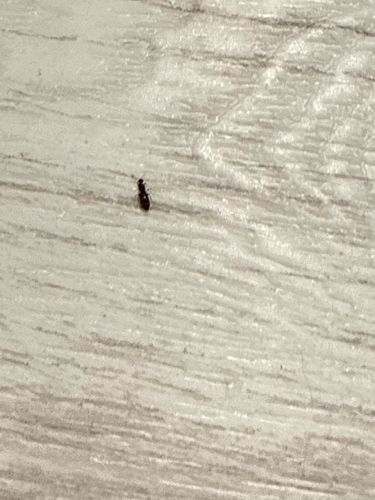
Red Flour Beetle
Tribolium castaneum
- Order & Family
- Order: Coleoptera, Family: Tenebrionidae
- Size
- Typically small, ranging from 2.5 to 4.5 millimeters (approximately 0.1 to 0.18 inches) in length.
Natural Habitat
This beetle is primarily found in human-made environments where stored food products are present. This includes pantries, kitchens, grocery stores, warehouses, flour mills, and food processing plants. They thrive in warm, humid conditions.
Diet & Feeding
The Red Flour Beetle is a notorious pest of stored dry food products. Both larvae and adults feed on a wide variety of grains, flours, cereals, pasta, dried fruits, nuts, spices, chocolate, and other processed foods. They can infest whole grains but prefer processed or broken grains and flour. They do not feed on sound, undamaged kernels.
Behavior Patterns
Flour beetles are highly active, constantly moving and exploring their environment. They are known for their strong aggregation pheromones, which lead to large clusters of beetles in infested food sources. They tend to avoid light and prefer dark, secluded areas within food packaging or cracks and crevices. Their entire life cycle (egg, larva, pupa, adult) can occur within infested food products. Females lay eggs directly into food sources, and larvae are particularly destructive feeders. Adults can live for several months to a year.
Risks & Benefits
Risks: The primary risk associated with Red Flour Beetles is significant economic damage to stored food products through direct consumption, contamination with their waste products (feces, exuviae), and imparting a foul odor and taste to infested goods. They can make food unfit for human consumption, leading to product recalls and financial losses for businesses and households. They are not known to bite or transmit diseases to humans. Benefits: There are no significant known benefits of Red Flour Beetles to humans or the ecosystem; they are almost exclusively pests.