
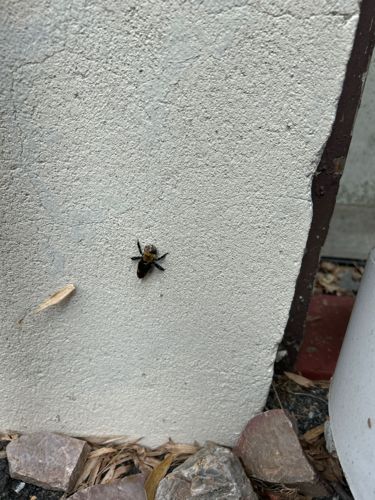
Eastern Carpenter Bee
Xylocopa virginica
- Order & Family
- Order: Hymenoptera, Family: Apidae
- Size
- Typically 20-25 mm (0.8-1 inch) in length, making them one of the largest bees in their range.
Natural Habitat
Eastern Carpenter Bees prefer dead wood for nesting, including dead trees, logs, and structural timbers in homes, barns, and other wooden structures. They are commonly found in suburban and rural areas where such wood is available, as well as in gardens, parks, and around woodlands.
Diet & Feeding
Adult Eastern Carpenter Bees feed on nectar and pollen from a variety of flowering plants. Their larvae feed on a mixture of pollen and nectar provided by the female bee within the nest tunnels.
Behavior Patterns
Eastern Carpenter Bees are solitary bees, meaning they do not live in colonies like honey bees. The females excavate tunnels in wood to create nests for their offspring. Males are territorial and can be seen hovering around nest sites to deter rivals and potential predators, although they cannot sting. They are important pollinators, especially for flowers with deep corollas, as they often 'nectar rob' by making a small slit at the base of the flower to access nectar without pollinating. They are most active from spring through late summer.
Risks & Benefits
Potential Risks: Carpenter bees can cause structural damage to wooden structures over time, as they bore tunnels into wood for nesting. While females can sting if provoked, they are generally docile. Males are territorial and may fly erratically around people but cannot sting. Potential Benefits: They are important pollinators for many plants, contributing to the reproduction of wildflowers and crops. Despite their potential to damage wood, their role as pollinators provides significant ecological benefits.