
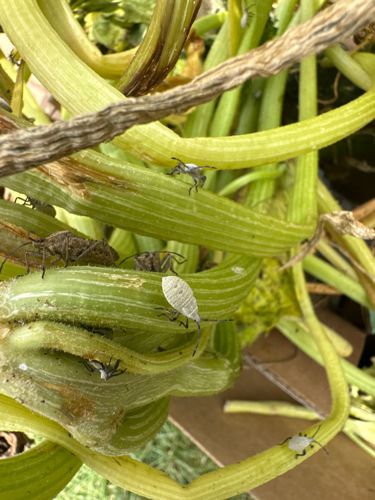
Squash Bug
Anasa tristis
- Order & Family
- Hemiptera, Coreidae
- Size
- Adults typically range from 1/2 to 5/8 inch (1.2 to 1.6 cm) in length. Nymphs are smaller and vary in size depending on their instar.
Natural Habitat
Primarily found in gardens and agricultural settings where cucurbit plants (squash, pumpkins, gourds, cucumbers, melons) are grown. They thrive in warm climates and can overwinter in plant debris or structures near host plants.
Diet & Feeding
Squash bugs are sap-sucking insects. Both nymphs and adults feed by piercing the plant tissue with their mouthparts and sucking out the sap. They are particularly fond of plants in the cucurbit family.
Behavior Patterns
Squash bugs undergo incomplete metamorphosis. Eggs are typically laid on the undersides of leaves, often in angular clusters. Nymphs (like some clearly visible in the image, especially the lighter colored ones) hatch and go through several instars (molts) before reaching adulthood. They often congregate on the stems and undersides of leaves. When disturbed, they may produce a foul-smelling odor.
Risks & Benefits
Potential Risks: Squash bugs are major agricultural pests. Their feeding causes wilting, yellowing, and eventual death of leaves and vines, severely reducing or destroying yields of squash, pumpkins, and other cucurbits. They can also transmit diseases to plants. Potential Benefits: No significant benefits are associated with squash bugs; they are almost universally considered pests.