
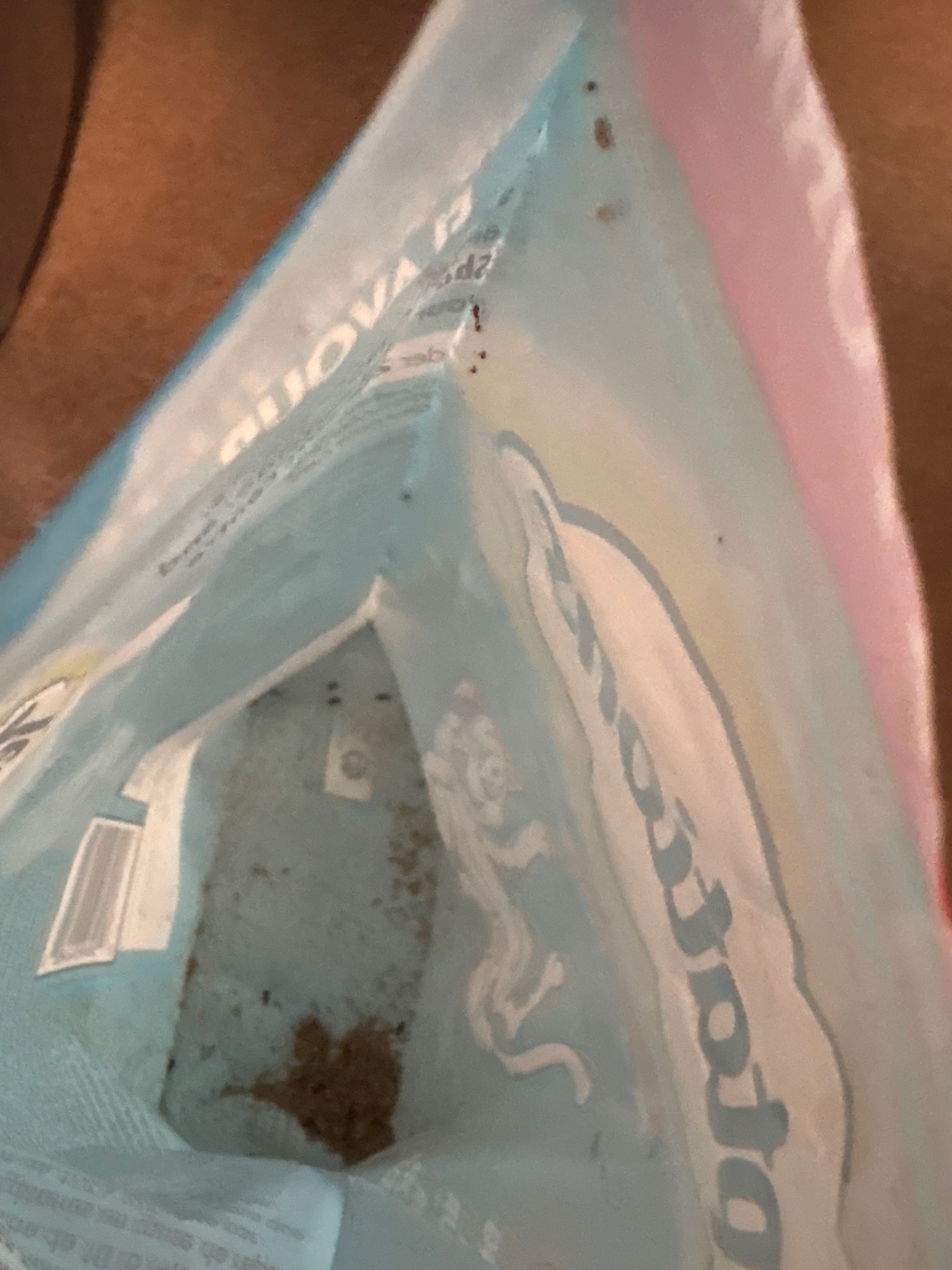
Community identification
Ant
Formicidae (Family)
- Order & Family
- Order: Hymenoptera, Family: Formicidae
- Size
- Typically ranges from 0.75 mm to 52 mm, though many household species are 2–5 mm in length.
Natural Habitat
Ants live in diverse terrestrial environments including soil, wood, and structures; they are frequently found in kitchens and pantries where food is stored.
Diet & Feeding
Ants are opportunistic omnivores that consume nectar, seeds, fungus, insects, and human food sources like sugars, proteins, and fats.
Behavior Patterns
They are highly social insects that live in colonies with distinct castes (queen, workers, drones). They use pheromone trails to communicate and lead other workers to food sources.
Risks & Benefits
Risks include food contamination, structural damage (like carpenter ants), or painful stings; benefits include soil aeration, seed dispersal, and decomposition of organic matter in the ecosystem.