
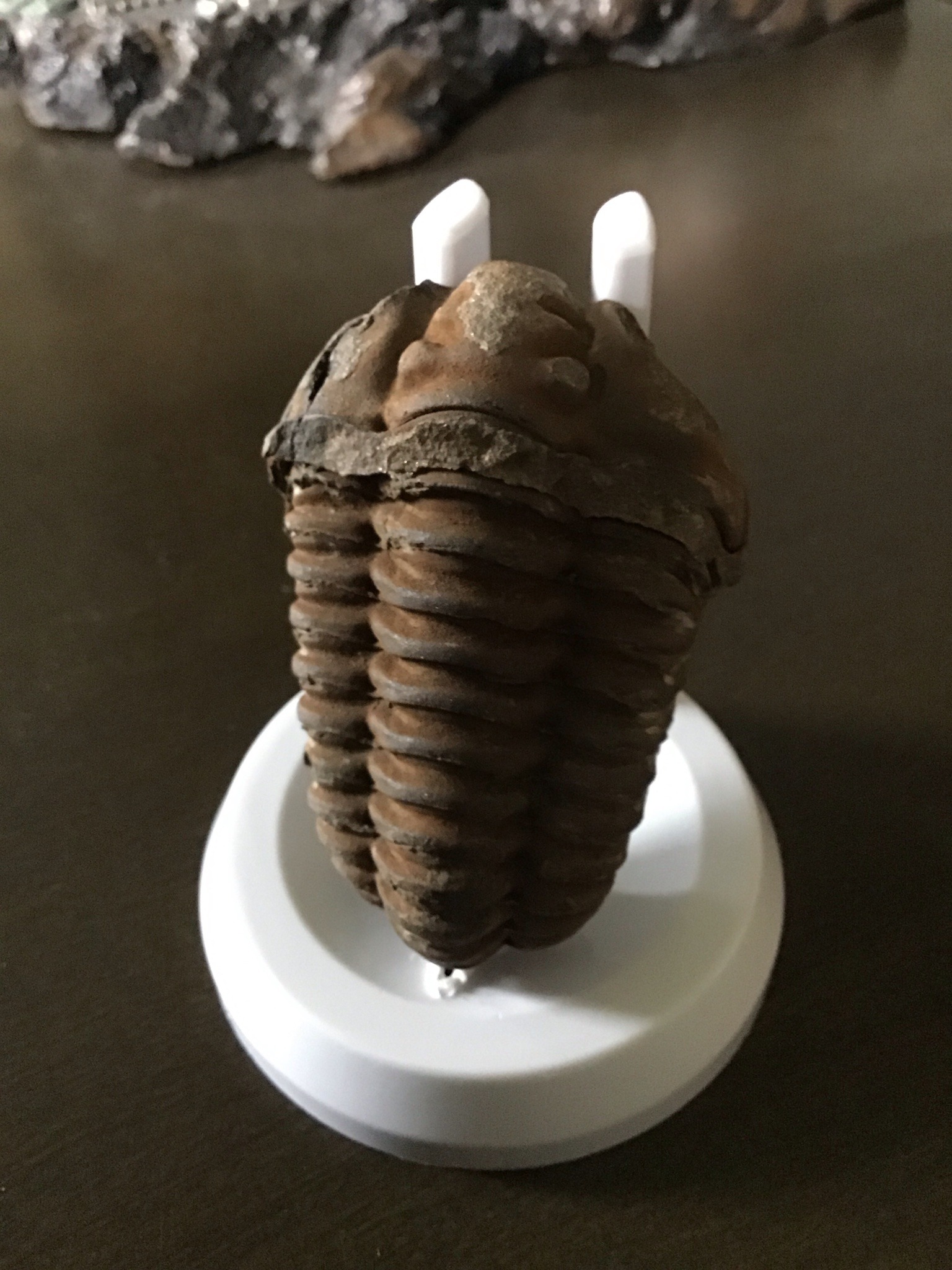
Community identification
Trilobite
Likely *Asaphus* sp. or a related trilobite (exact genus cannot be confirmed from the image)
- Order & Family
- Order Phacopida; family uncertain (possibly Asaphidae)
- Size
- This specimen appears approximately 7–10 cm long; trilobites ranged from under 1 mm to over 70 cm.
Natural Habitat
A marine fossil from Paleozoic seafloor sediments, probably deposited in shallow to moderately deep seas.
Diet & Feeding
Likely a benthic scavenger, detritivore, or small-particle feeder; some trilobites were predators.
Behavior Patterns
Trilobites were extinct marine arthropods that molted repeatedly as they grew. Many crawled across the seafloor, burrowed, or enrolled their bodies defensively.
Risks & Benefits
No direct risk to humans beyond sharp or fragile fossil edges. It has educational, scientific, and collectible value, helping document Paleozoic marine ecosystems.