
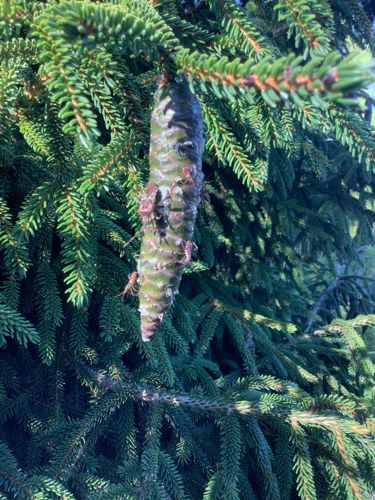
Spruce spider mite
Oligonychus ununguis
- Order & Family
- Order: Trombidiformes, Family: Tetranychidae
- Size
- Adult mites are very small, typically 0.3-0.5 mm in length, making them difficult to see with the naked eye without close inspection.
Natural Habitat
Spruce spider mites are commonly found on various conifer trees and shrubs in temperate regions, particularly in nurseries, landscapes, and forests. They thrive in dry, warm conditions.
Diet & Feeding
These mites are plant feeders, specifically feeding on the chlorophyll within plant cells using their piercing-sucking mouthparts. They prefer conifers, including spruce, fir, pine, arborvitae, and juniper.
Behavior Patterns
Spruce spider mites typically overwinter as eggs on the branches of their host trees. In the spring, eggs hatch and nymphs begin feeding. They can have multiple generations per year, especially in warm conditions, leading to rapid population growth. They produce fine silk webbing, particularly when populations are high, which can cover needles and small branches.
Risks & Benefits
The main risk associated with spruce spider mites is damage to coniferous trees, especially during outbreaks. Their feeding can cause needles to mottle, turn yellow or brown, and eventually drop prematurely, leading to defoliation, reduced growth, and in severe cases, tree mortality. They do not pose a direct risk to humans. There are no significant benefits associated with their presence; they are primarily considered a pest in horticulture and forestry.