
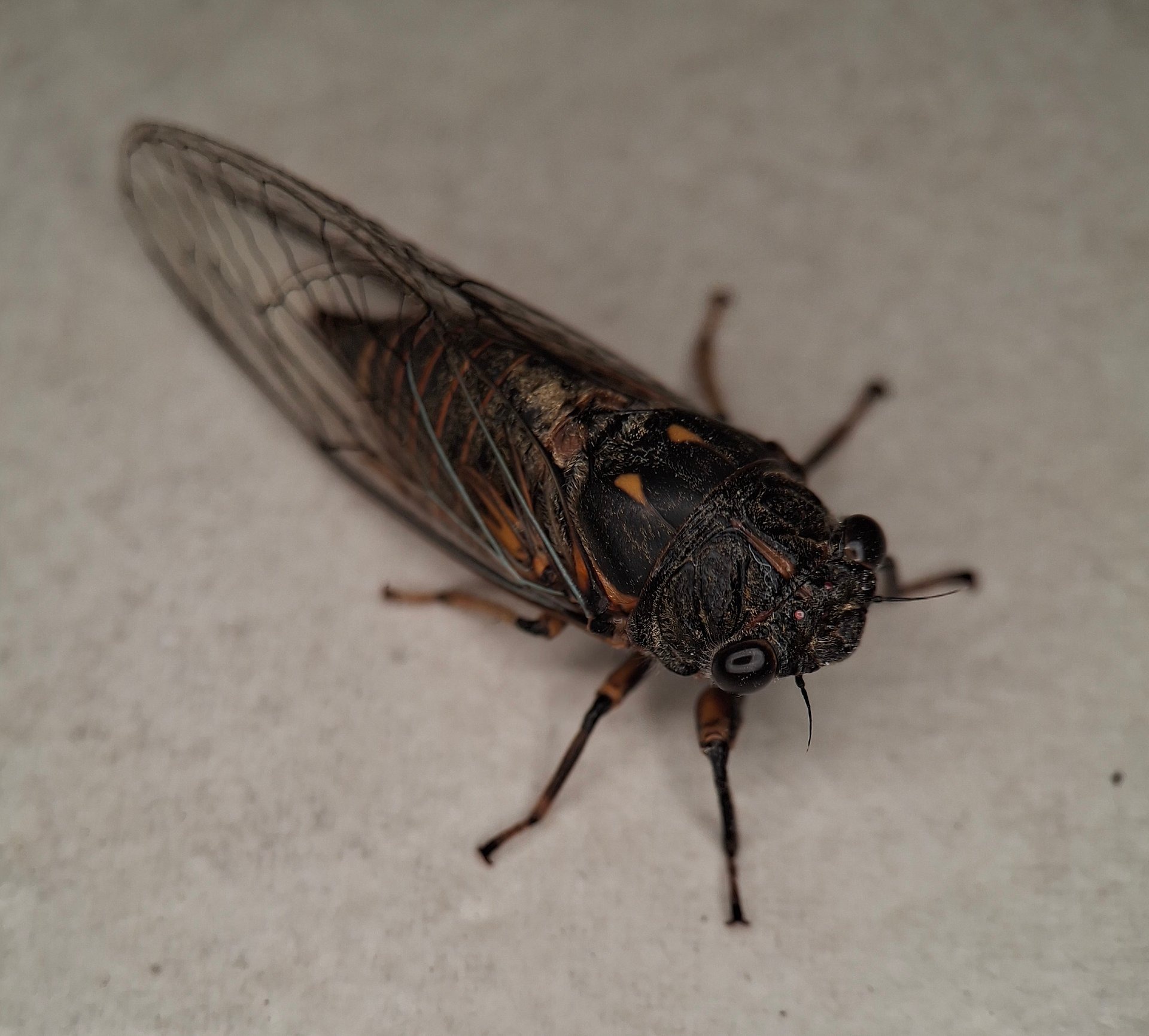
Community identification
Annual Cicada (often called Dog-day Cicada)
Neotibicen canicularis
- Order & Family
- Hemiptera: Cicadidae
- Size
- 25 to 50 mm (1 to 2 inches) in length
Natural Habitat
Woodlands, gardens, and urban areas with deciduous trees across North America
Diet & Feeding
Nymphs feed on sap from tree roots underground; adults feed on xylem sap from tree twigs and branches
Behavior Patterns
Notable for the loud buzzing song produced by males to attract mates. They have a multi-year life cycle (typically 2-5 years) but appear every summer because some individuals reach maturity each year
Risks & Benefits
Generally harmless to humans; they do not bite or sting. They provide a high-protein food source for birds and mammals, and their emergence helps aerate the soil and recycle nutrients